
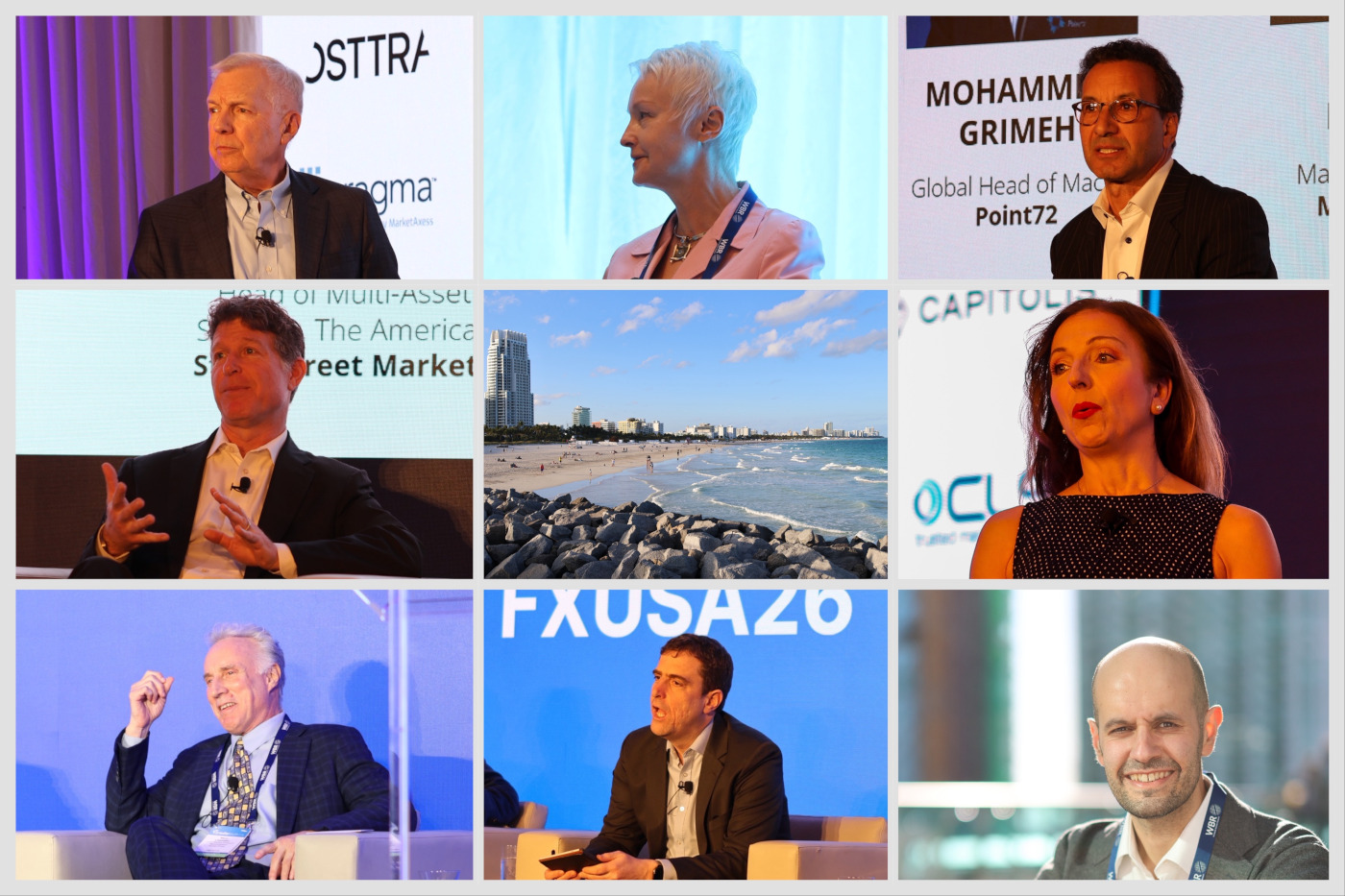
Over recent years, the finance community in Miami has grown, given that a number of hedge funds have opened up large offices there. Every February, the FX community from New York, and from other parts of the world meets in Miami at the TradeTech FX USA conference. I’ve been a number of times, and over the years. I’ve found the conference to be a good way to gauge what’s hot (and not) both in FX and macro more broadly. The conference itself usually has a number of different themes, split between FX execution and also broader macro themes, interspersed with tech and more.
In this article, I’ll try to discuss my takeaways from the event. Whilst, it is impossible to be totally comprehensive given the sheer number of sessions, I’ll try to give a flavour of the discussions from the event. Some discussions were under Chatham House rules, so in some cases, I’ll focus on more on the general takeaways.
Geopolitics: From the White House
Marc Gustafson (Eurasia Group) gave a fascinating presentation on the Trump presidency and what to expect for the rest of the term. He began with a few anecdotes from his time in the White House in the Situation Room, working for Obama, Biden and Trump, and how their very differing styles on camera and in private. He noted how in his first term, at the start there had been a measured approach from Trump. In his second term, he had moved at breakneck speed.
He felt that we were at “peak Trump”, with the various checks and balances he can encounter (indeed the recent striking down of tariffs by the Supreme Court is an example of that), from Congress and public opinion and, inflation was also another factor. Foreign policy could have some upsides, but also risk, noting that other presidents had made blunders, and it will happen to Trump. He noted that the schedule of a president is hard, and old age could count against Trump. On Iran, his base case was that there would likely be an attack.
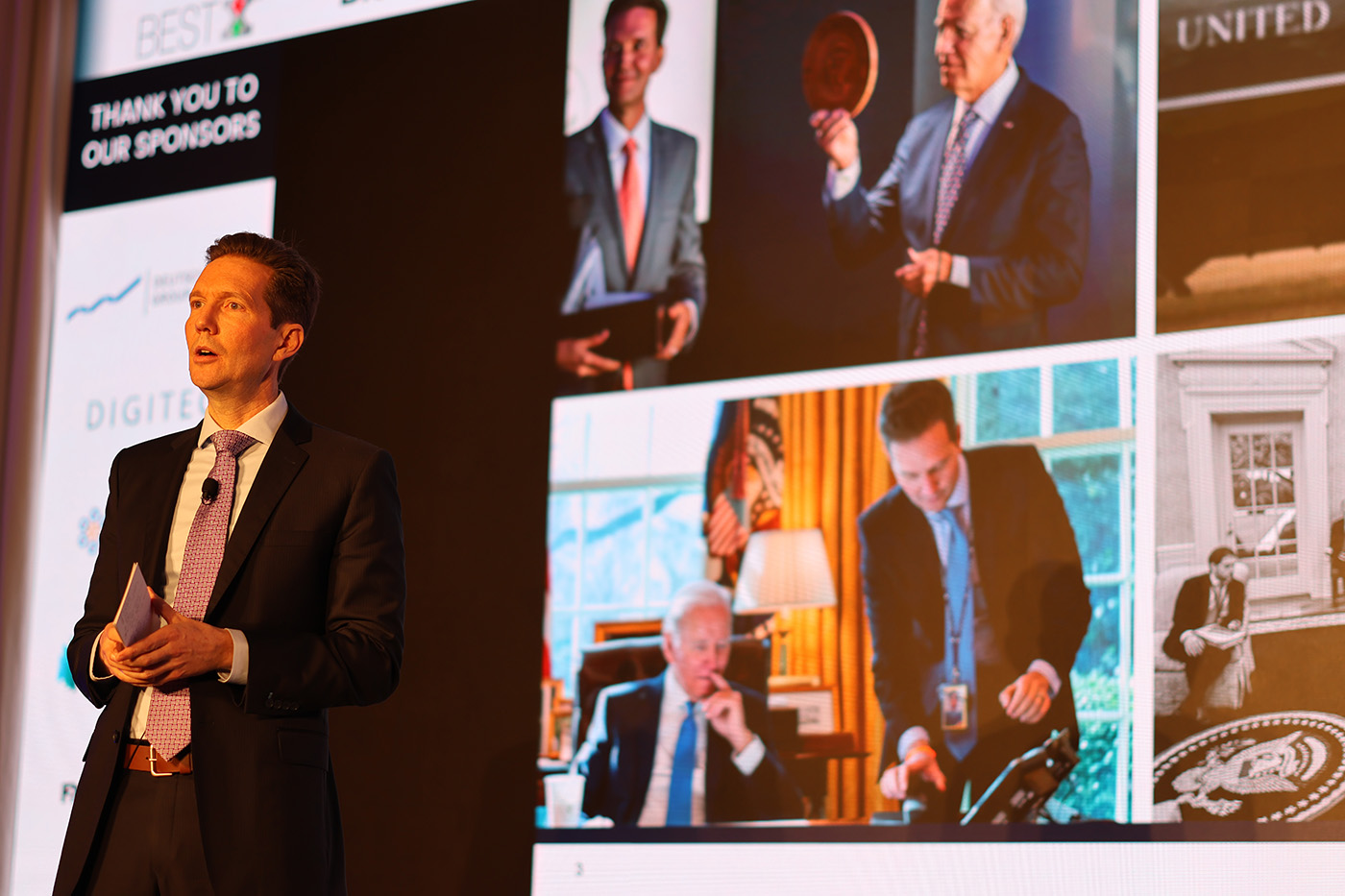
Marc Gustafson (Eurasia Group)
Macro views
One of the keynote sessions on macro saw Michael Koester (Market Alpha Advisors) interview Mo Grimeh (Point72). Grimeh saw some stickiness in inflation because of tariffs, expecting it to be north of 3%. Just as an aside, the US inflation market is currently pricing in around 2.5% for a year out. Our models at Turnleaf Analytics see US CPI around 2.8% that far out, somewhat closer to Grimeh’s view.
Grimeh also saw some softening of the unemployment rate pushing up to around 4.6-4.7%. He thought that the Fed would cut 1-2 times this year. On the Fed, Grimeh noted that it is more than purely the Chair, hence, it would be unlikely that Walsh would be able to cut rates drastically. If there was a substantial softening in policy, whilst stock might react positive initially, it would have the potential to push up long term yields.
On a broader perspective, we are largely done with convergence in policy of the various global central banks he suggested. This would likely be good for the FX market and FX vol. Recently, vol has been drifting down, albeit punctuated with spikes (and not purely just in FX). Grimeh noted that several factors had been helping to push down vol. Retail investors had been buying structured notes which supressed volatility. There had been inflows into systematic strategies such as trend and vol selling. There had also been inflows in multistrat firms (as well as newcomers). Hence, hundreds of teams had been created to do similar things (eg. mean-reverting carry) resulting in a convergence. We had seen the lows in volatility in his opinion.
On a bigger picture, whilst there had been some reversal of globalisation, with less multilateral actions, and a move towards bilateral activity, on the theme of selling US assets, he didn’t believe that was happening. However, on the margin there was less allocation to the US.
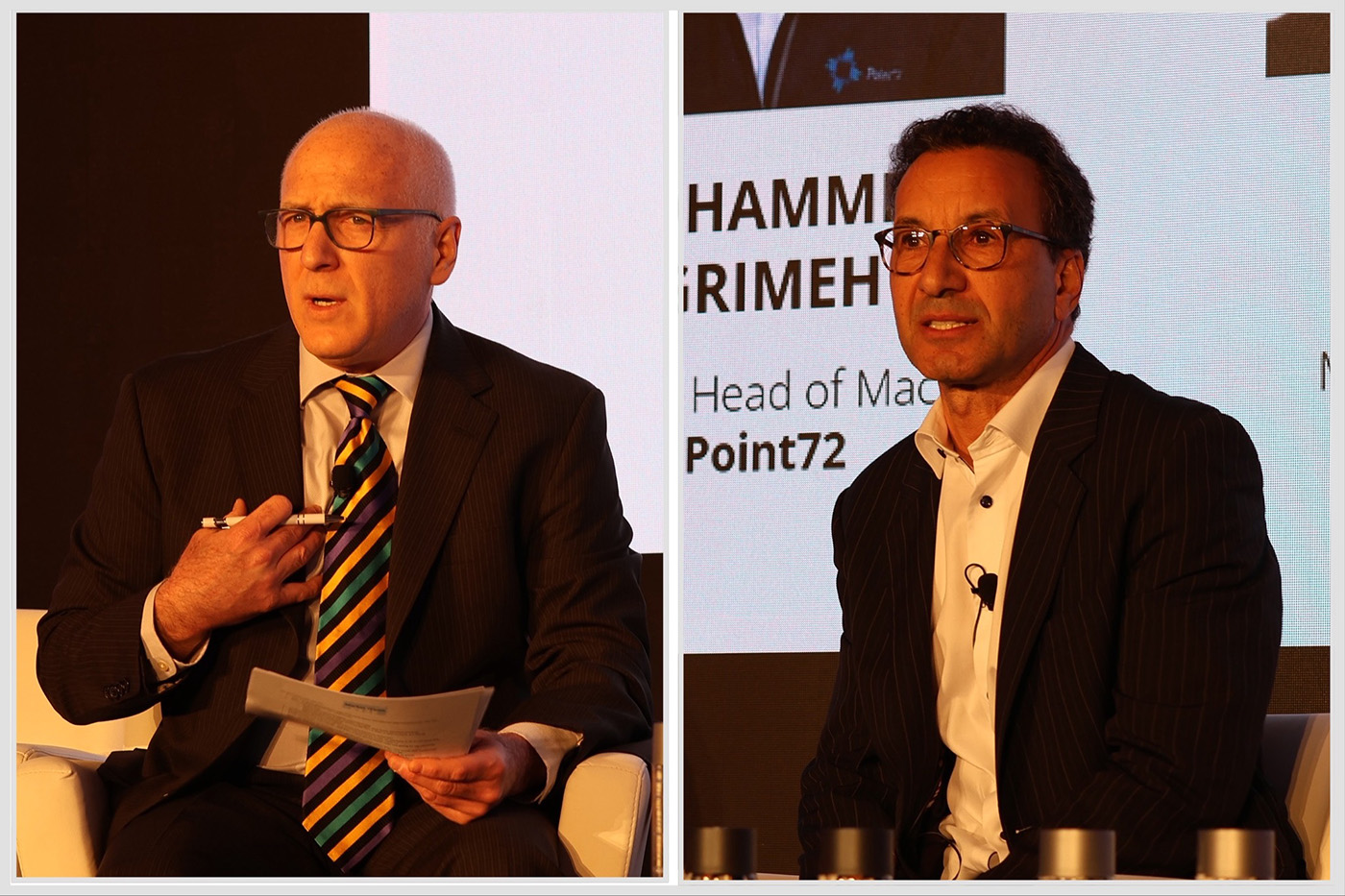
Michael Koegler (Market Alpha Advisors) and Mo Grimeh (Point72)
Dori Levanoni (Capstone) was interviewed by Lee Ferridge (State Street) on the outlook for FX. One of the first questions was on the USD, and the oft discussed notion of “dollar debasement” and are we in downtrend? Levanoni suggested we’re not. However, we are at a pivot point. The USD has rallied since 2011, and we’re at pretty high valuations. Then there is the question of exceptionalism. Hedge ratios for USD was also lower than normal. On other currencies, he felt that GBP was at risk, with an uncertainty premia.
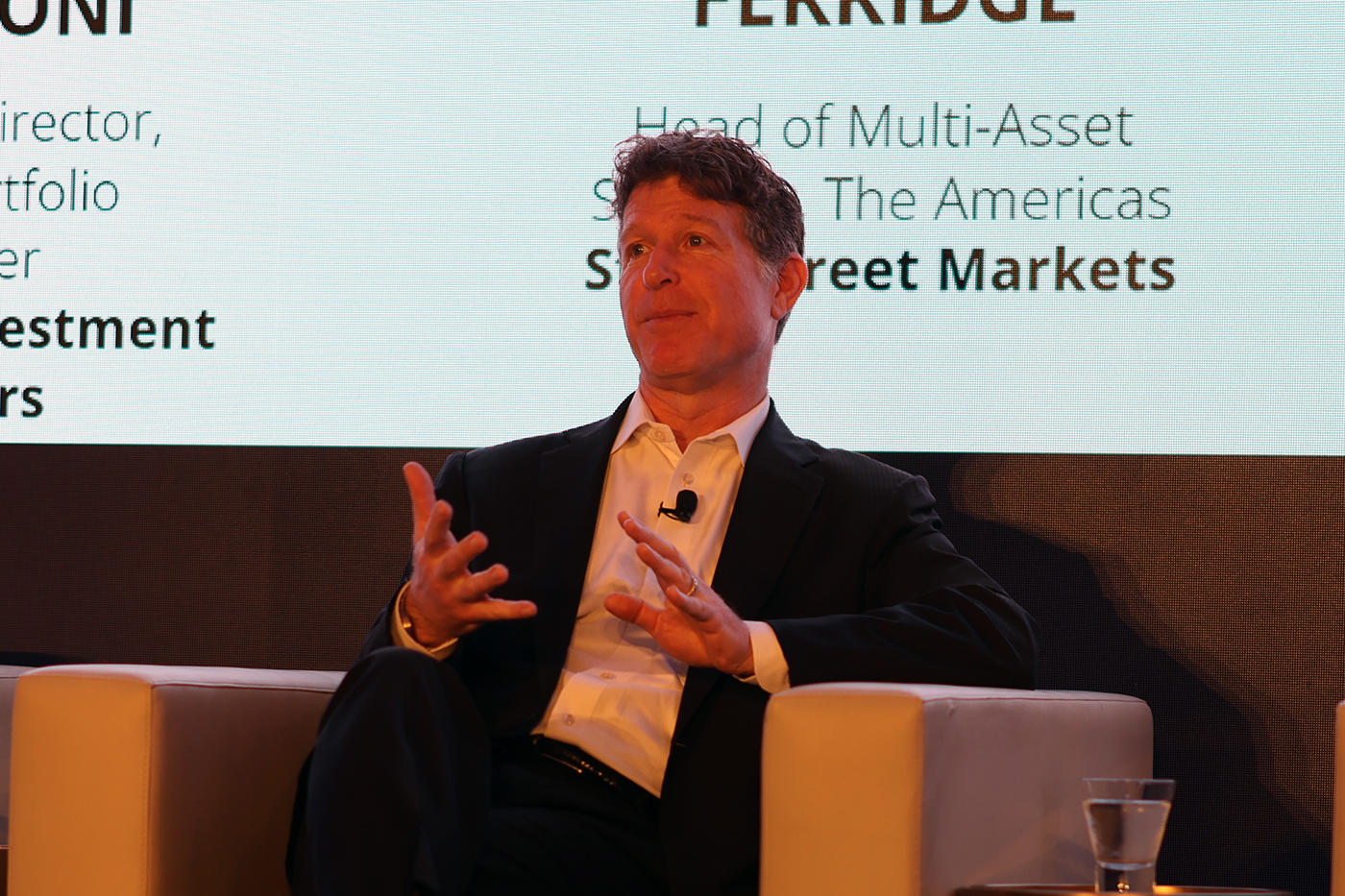
Dori Levanoni (Capstone)
There was a panel moderated by Michael Melvin (UCSD Rady School Of Management) on supply chains, tariffs and capital flows. Ankit Sahni (Element) gave a recap of what had happened over the past year, noting that tariffs had broadly been expected last January, albeit not the broad range of countries they would be applied to. He noted how the market view had shifted from overweight US based on growth and tariffs to a very short position at present.
Bill Campbell (Doubleline) said that Trump had been an accelerant of deglobalisation. Globalisation had provided cheap labour and a global savings glut. EM had a better fiscal situation, had higher real yields, and there was still room for compression (of yields) in EM.
So was this a sell US story or a buy EM story, Melvin asked? Colin Crownover (Fidelity) suggested it was more a sell US story than buy EM story. After all, tariffs did not alter the external balance. What it did change was the price at which investors wanted to buy US debt. Flows were always positive, it was how they are priced that had changed. People were overweight US assets, and supply chains are very complex, it was a story that might play out over the coming decade.
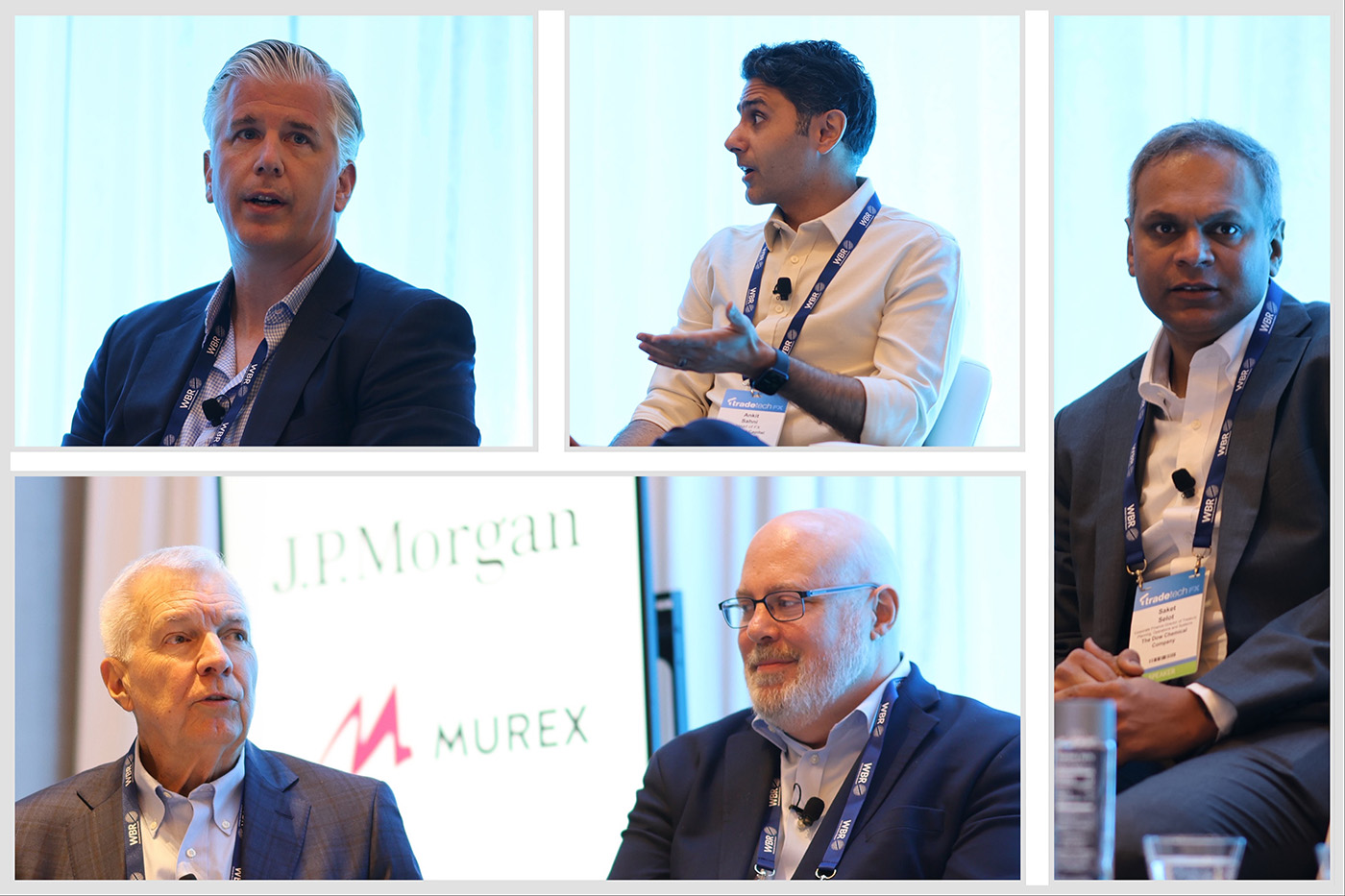
Bill Campbell (Doubleline), Ankit Sahni (Element Capital), Saket Selot (Dow Chemical), Colin Crownover (Fidelity Investment) and Michael Melvin (Rady School of Management UCSD)
Keeping to a macro theme, Michael Koegler (Market Alpha Advisors) moderated a panel focused on EM. Natalia Gurushina (VanEck) noted that it would be difficult to repeat the same extent of EM outperformance this year. That being said, EM markets tended to pay more (ie. yields), EM countries were less leveraged, and as a result EM central banks were less constrained by the fiscal factors. Geraldo Garcia (Banxico) echoed the bullish setup for EM, noting how growth had been strong in EM versus DM. Some factors which had been traditionally been problematic for EM, like inflation were less of an issue now. In G10, inflation was around 2-4%, whilst in EM it has been 3-5%. DM had lower rates, and EM had higher real rates. In terms of specific currency views in EM, long BRL seemed popular in the panel, with IDR as a short.
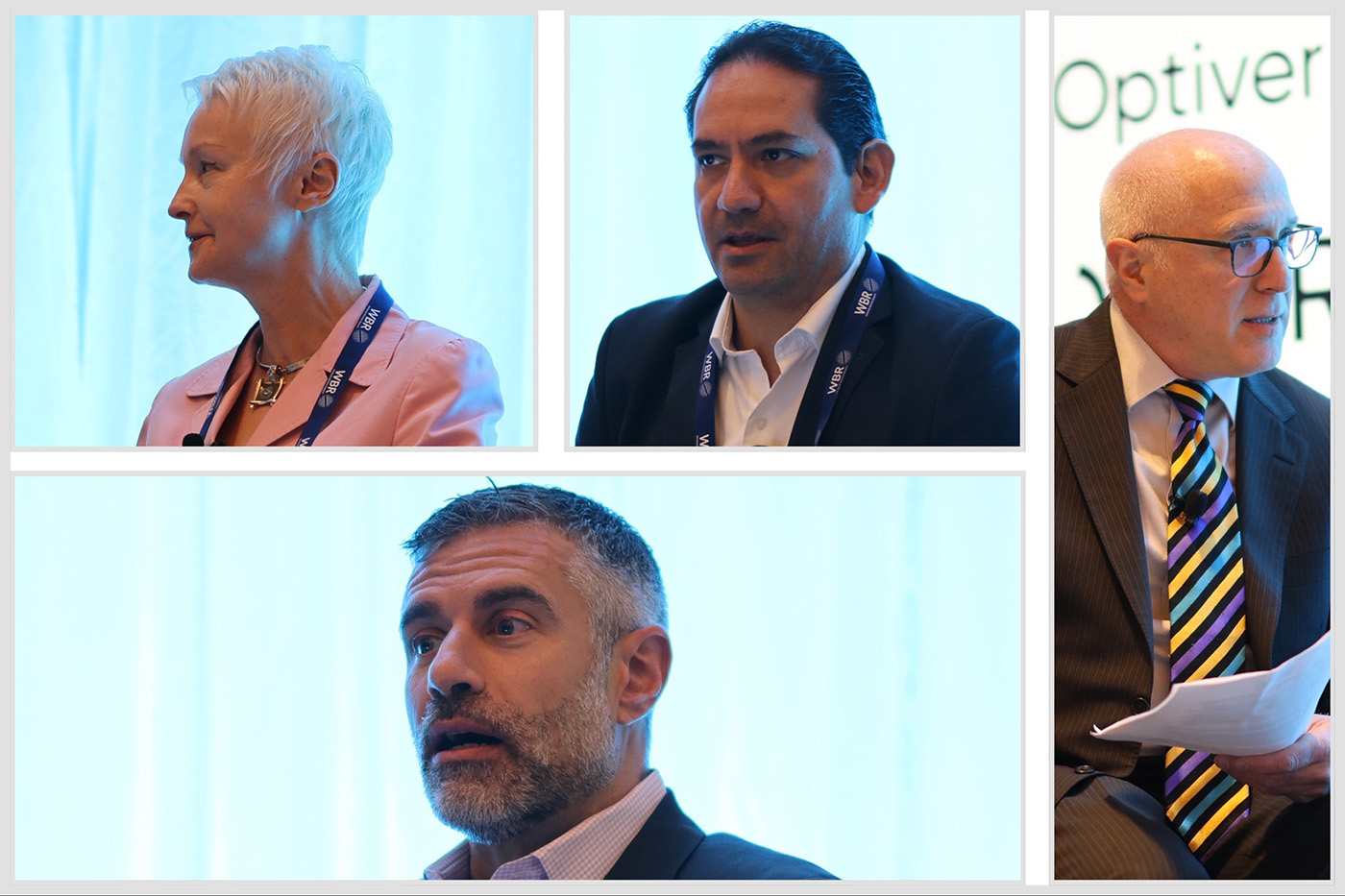
Natalia Gurushina (VanEck), Gerardo Garcia (Banxico), Michael Koegler (Market Alpha Advisors) and Chris Milonopoulos (Lazard Asset Management)
Allan Guild (Hilltop Walk Consulting) hosted an Oxford Style Debate on the USD and exceptionalism. Marc Chandler (Bannockburn Global Forex) took the bearish viewpoint of the debate. He suggested that a rubicon had been crossed with Greenland. He noted that the USD’s role was changing, with Trump’s actions with respect to the Fed. There didn’t necessarily need to be a replacement for the USD, it could be fragmented. Walter O’Leary (University of Miami) took the bullish viewpoint. The USD still was 60% of reserves. Indeed a reserve currency is not replaced by blips. There was a rule of law and transparency compared to other alternatives. The US had deep capital markets, and retained military strength, all factors to help preserve US exceptionalism.
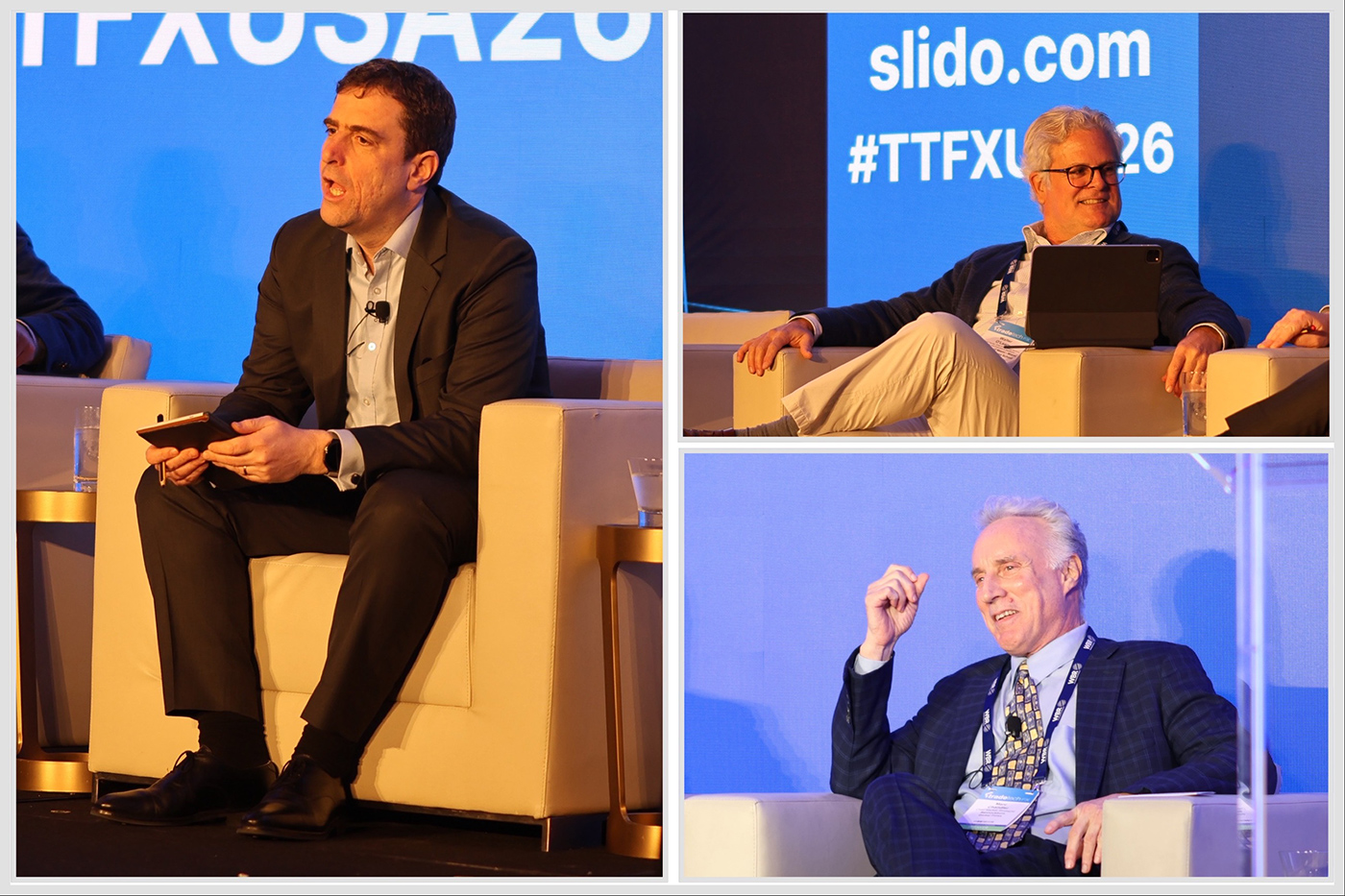
Allan Guild (Hilltop Walk Consulting), Marc Chandler (Bannockburn Global Forex) and Walter O’Leary (University of Miami – Miami Herbert Business School)
FX market structure and execution
Michael Melvin (Rady School of Management UCSD) moderated a panel on FX market structure, which featured speakers from the sell side, buy side, vendors and official organisation. Anna Nordstrom (NY Fed) discussed the role of her team. They operated in the FX market, frequently to do customer transactions for the US government. In recent weeks there has been news that the NY Fed had “checked rates” on USDJPY on behalf of the US Treasury. Whilst, it was not possible to comment on particular situations, Nordstrom noted that the US Treasury owned USD policy. If they wanted to do something in the market (eg. intervention), the NY Fed would be clear with market participants who they were dealing for.
There was also a lot of discussion of the FX Global Code, which was a collaboration between official organisations, and participants in the FX market. It was noted that it had cleared up a lot of bad practices. At the same time some trading groups haven’t signed the global code yet.
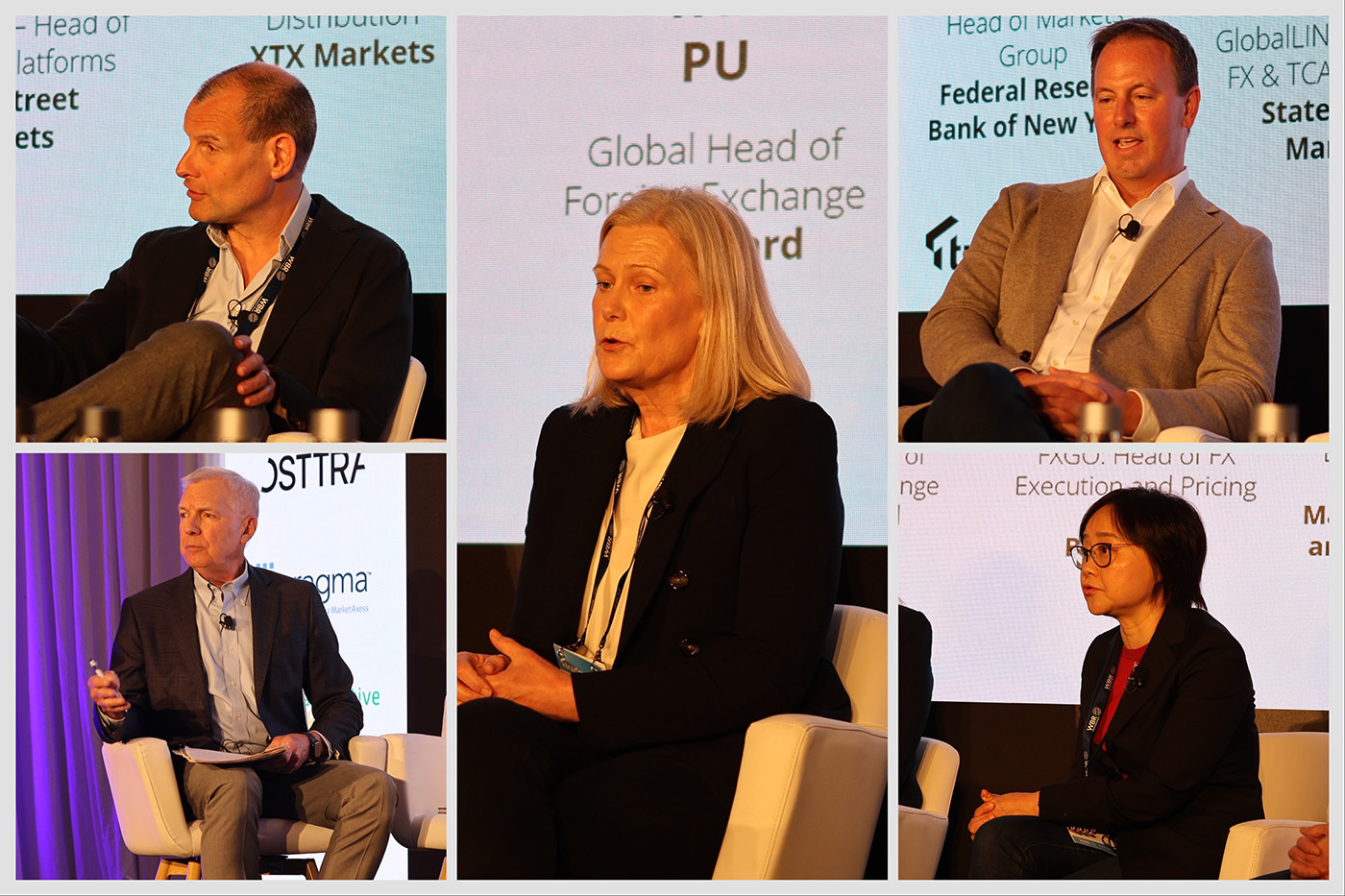
Jeremy Smart (XTX), Anna Nordstrom (NY Fed), Chris Matsko (State Street), Yan Pu (Vanguard) and Michael Melvin (Rady School of Management UCSD)
In recent years, a major theme has been workflow automation in FX execution. Allan Guild (Hilltop Walk Consulting) chaired a panel on this subject. One big trend has been towards the consolidation of execution desks on the buy side from single asset only to multi asset. Marc Natale (Murex) noted that it was challenging, because whilst the objective was to have a cross asset desk, execution, risk etc. was all in different systems.
Matt O’Hara (360T) explained that the technology is here. Automating G20 was easy, and indeed 90% of spot is automated there. However, in forwards and swaps place, it was much less automated. When it came to NDFs deep and accessible liquidity was needed for automation, Jay Moore (LMAX) suggested.
Bart Joris (LSEG) said that discussions had to have end to end workflows had been had for years. However it was not that simple. How much automation would you like to do? TCA could be complex, interacting with them required programming skills, although AI was helping here. Indeed, I’ve seen some nice approached to TCA, such as TradeFeedr’s system, which has a Python based API, so you can do a lot of complicated querying via a Jupyter notebook. I would also expect MCPs to become important here for querying TCA.
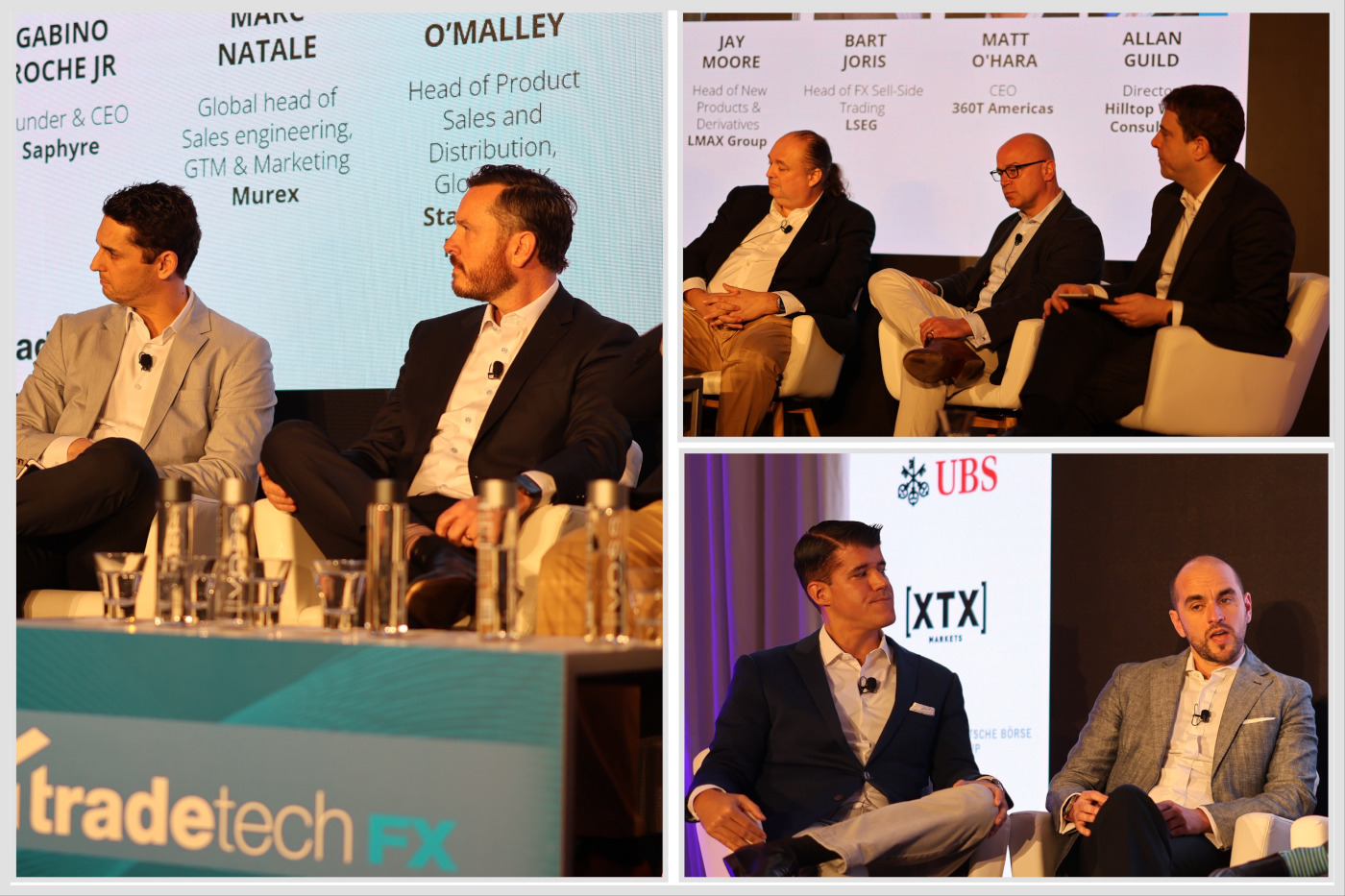
Michael O’Malley (State Street), Jay Moore (LMAX), Bart Joris (LSEG), Matt O’Hara (360T), Allan Guild (Hilltop Walk Consulting), Marc Natale (Murex) and Gabino Roche Jr (Saphyne)
AI and its impact on markets
Iro Tasitsiomi (T Rowe Price) gave a presentation on AI and investing. She noted that the idea of AI is not new, tracing back its origins to the Dartmouth meeting in the mid-1950s. Since then, it has gone through various cycles, including the “winter of AI. Hence, the overnight sensation of the launch of ChatGPT was more the culmination of decades of work. Whilst Gen AI might be new, old style AI (ie. supervised learning) has been around for many years.
There was no free lunch when it came to using generative AI, such as hallucinations, non-determinism, and data leakage. There was also the temptation of using it for the sake of it, which was a big risk (hammer looking for a nail). Despite this AI could be an enormous accelerator.
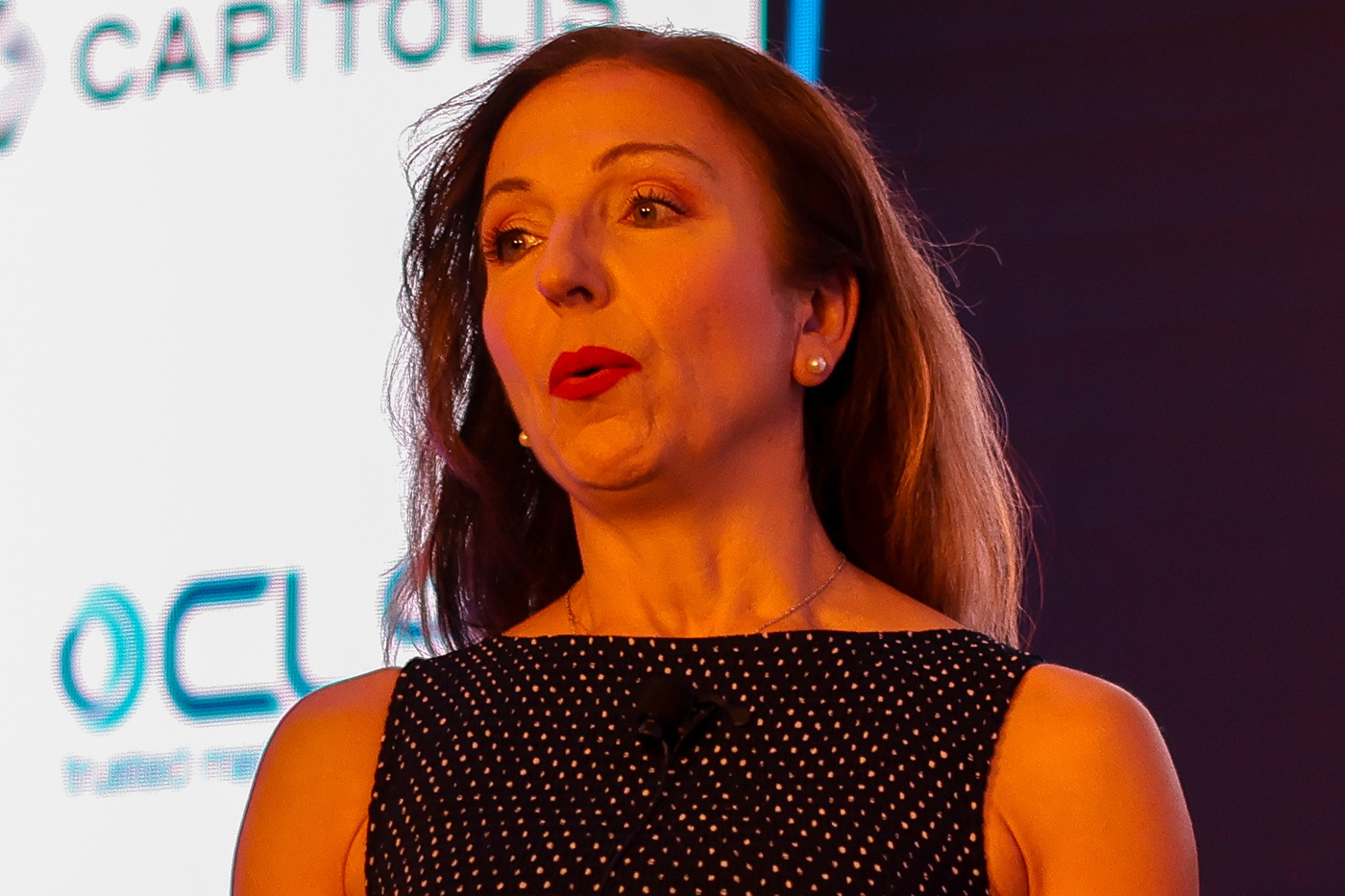
Iro Tasitsiomi (T Rowe Price)
I also gave presentation about coding with Python, whilst addressing the key question we have over software engineering: why should we learn coding if we have AI to do it for us? LLMs can code very well these days. Indeed, I use Claude Code a lot, and a gave a quick demo of some analysis that I had done using it, to decompose US CPI.
Whilst these tools can make us much more efficient, it is still incredibly important to understand the code they generate, I suggested. I explained that the whole point of a human language is that it is incredibly expressive. The flipside, is that it is imprecise, unlike a programming language. Hence, you may well ask an LLM to code something, but what it produces is not precisely what you wanted, just because human language is easy to misinterpret. In my example, Claude Code did indeed right masses of code, but there was some mistakes which I had to fix, which resulted in the wrong or incomplete decomposition of US CPI. The code structure also needed to be refactored to make the code easier to read and maintain.
Furthermore, one of the major costs of software is not writing it initially, but the maintenance, particularly if it has been designed poorly. Software engineering as a discipline is not purely about writing the code. Indeed over the years, software engineering has been more about writing at higher and higher levels of abstraction (we don’t write assembler code for example). In a sense, LLMs are just another level of this abstraction for developers to adjust to.
There was an AI and data focused panel moderated by Lee Ferridge (State Street). Akshay Padmanabha (Balyasny) noted how AI was being used extensively. It could be used to automate many different things, such as data cleaning, screening, information extraction etc. Ed Tostanoksi (PGIM) noted how it was challenging from a multi asset perspective, to use some AI techniques. With many tools, the sample size for multi asset was too small. When looking at regimes, you had to go a long way back. However, classical statistics was designed for situations like this. But with large datasets, these newer techniques could add value. Padmanabha added that it was not about decision making. You had to figure out what AI was good at. The black box nature of these tools made it difficult, although prompting to explain can help. There was also the question of overfitting.
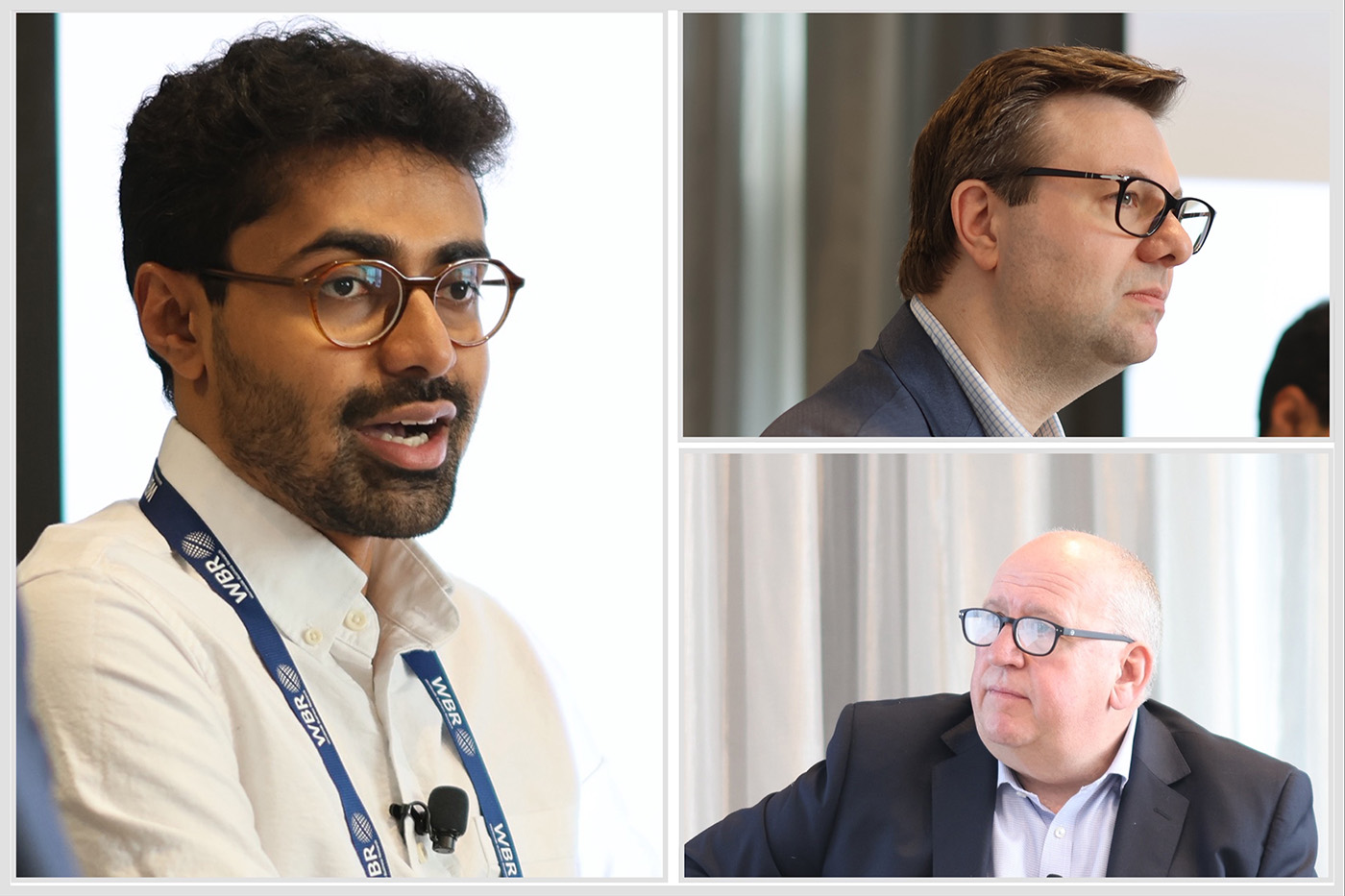
Akshay Padmanabha (Balyasny), Edward Tostanoski (PGIM) and Lee Ferridge (State Street)
Conclusion
There were many different discussions at TradeTech FX USA. On macro, the consensus view was short USD, to some extent based on the sell US theme. Although perhaps the bearish USD view was not as prevalent as I would have thought. The other strong view from discussions, was broadly long EM, on the back of stronger growth, high real yields and better fiscal picture. There was also a lot of focus on inflation, with many participants expecting stickier inflation than perhaps is priced into the market. Indeed, Turnleaf Analytics is expecting inflation towards the end of the year to be above what is priced by the inflation fixing markets in the US.
Outside of macro, AI was a big theme at the conference, and it is making inroads both from an idea generation perspective, to help screen and structure data. On the execution side, a lot more houses are taking advantage of electronic execution, but we are still very far from the stage of fully automated end to end workflow, especially when it comes to areas outside of G10 FX spot.
I will be interested to see what discussions will be like next year. Let’s see!