
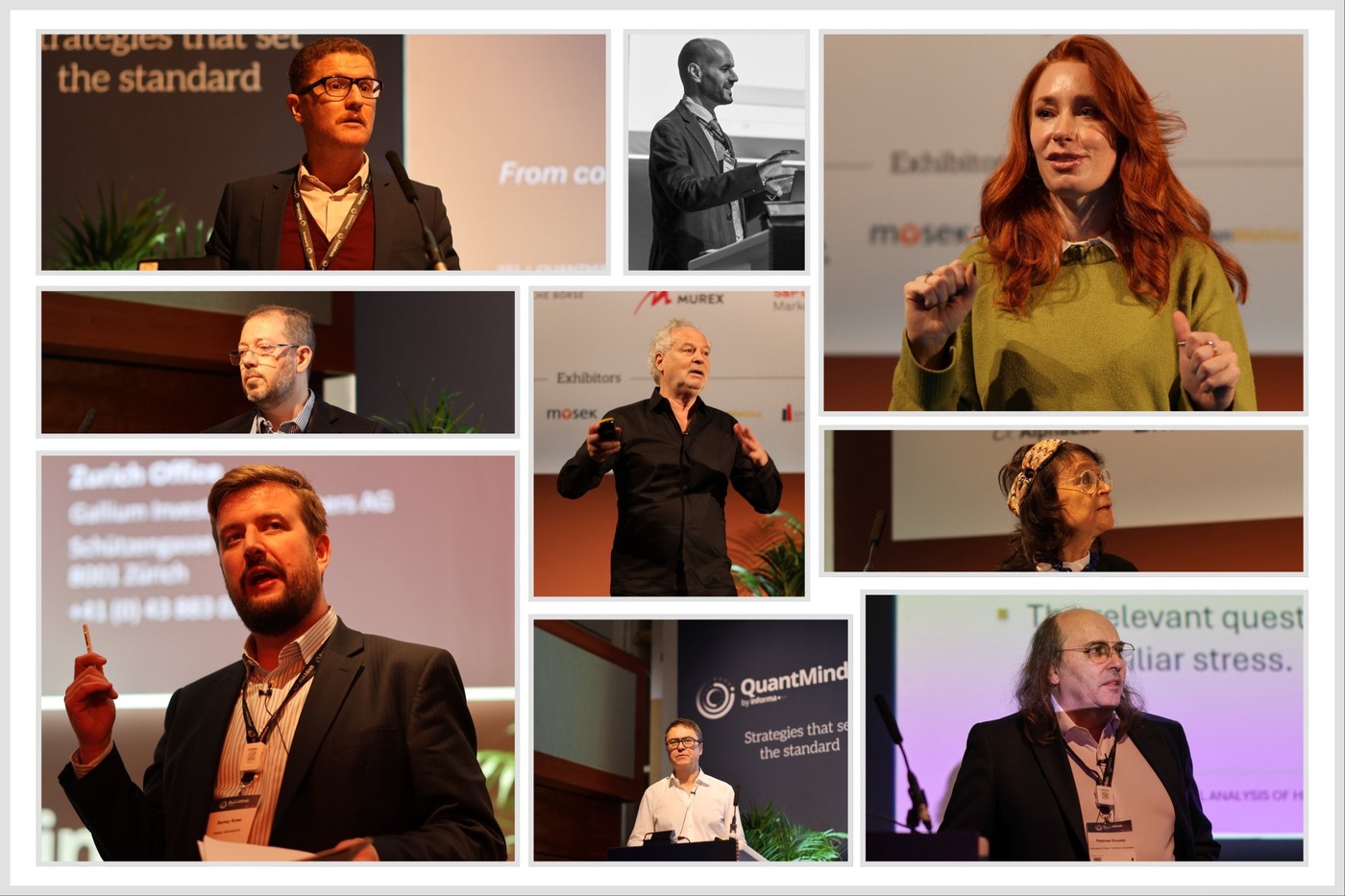
I’ve been going to QuantMinds for quite a few years, and this week I attended the latest one which was held in London. When I started going over a decade ago, it was called Global Derivatives, and the focusing was largely on topics such as option pricing. As the role of quants has become more varied over the years, so has the focus of the conference. Of course, there are still discussions around option pricing and risk these days, but now there are also many more talks around generating alpha. As you might expect, AI has become a very important part of the event, and its use cuts across many of the areas of quant finance. In this write up, I’ll try to give a few of my takeaways from the various talks I attended. Given my particular interest is more skewed towards alpha applications, most of the discussions I’ll cover will be in that area.
The state of quant today and AI, risks and all
Samar Gad (Kingston University) chaired a panel with Joe Hammer (Fidelity International), Robert van Kleeck (Assenagon) and Luca Fuccaro (Investcorp-Tages) on the topic of AI-driven alpha: from research to production. Gad asked if AI was helping? AI is the topic of the day. For a large term there are advantages in scale. However, there is also a disadvantage of bureaucracy. Whilst teams might use AI for adhoc tasks, some cases could be centralised to allow for sharing.
The way AI had been used had changed over time. First use cases, could be to improve existing workflows, then using AI to develop new ideas, such as bringing in more qualitative factors (eg. earnings calls, economic calls etc.). The future could bring an entire rethink. Importantly, more data and backtests doesn’t necessarily mean more alpha. The volume of signals generated has increased massive over the year (eg. 3 to 4x increase). Hence, it was not possible to evaluate them in the same way.
Indeed one participant mentioned that it had resulted in a large increase in the size of their research team. This is actually something I’ve observed at our startup Turnleaf Analytics. AI does improve productivity. However, because you generating many more models and evaluating more datasets, you do definitely need more people to help with this.
It was also the case that you didn’t need to always use frontier models. It’s possible to use open weight models and older models (also has the benefit of being out of sample) for many simpler tasks.
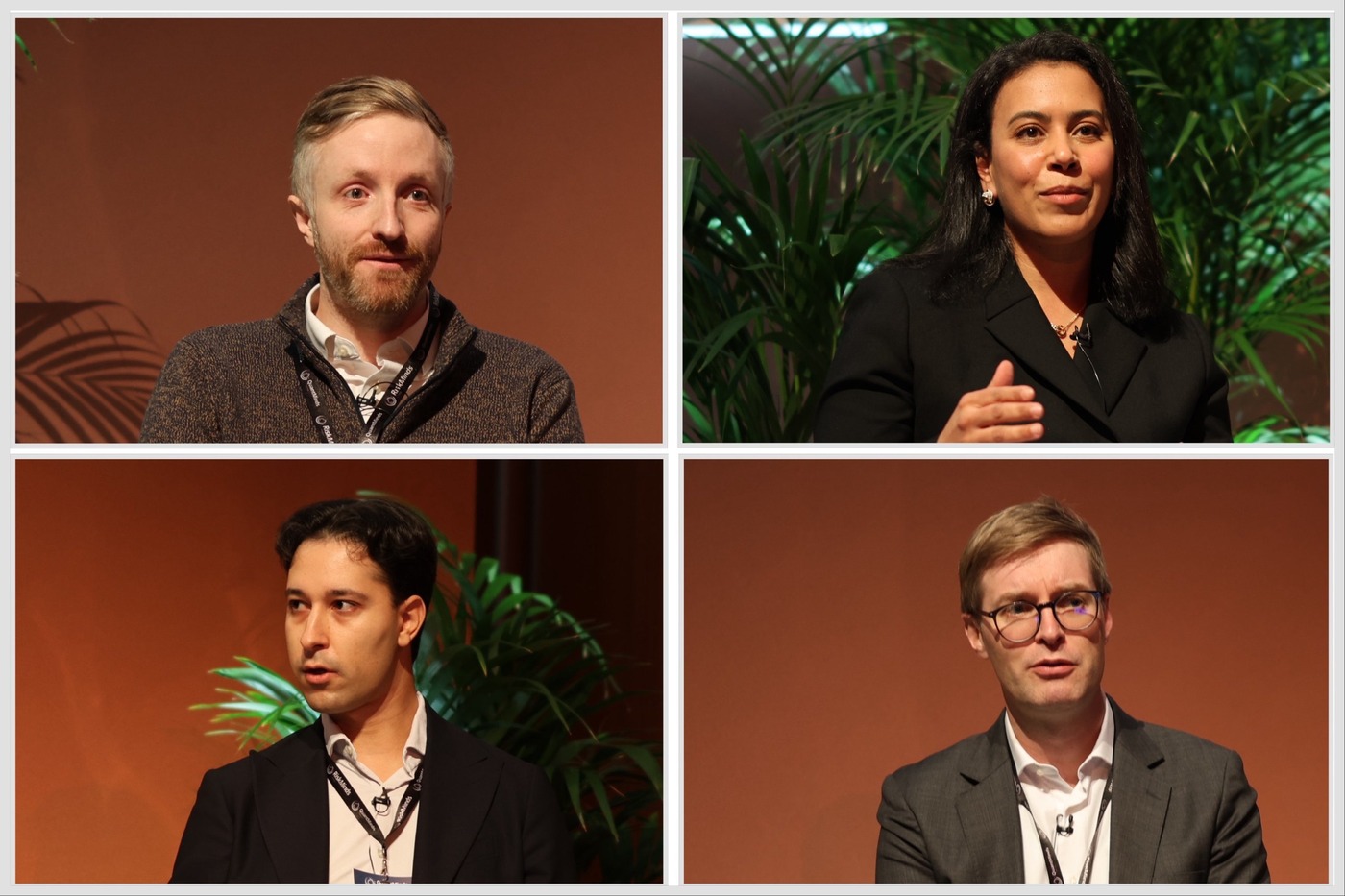
Joe Hammer (Fidelity International), Samar Gad (Kingston University, moderator), Robert van Kleeck (Assenagon) and Luca Fuccaro (Investcorp-Tages) – clockwise from top left
Taking a slightly different approach to addressing the state of quant finance today, Rama Cont (Oxford University) chaired a panel with participants, Amira Akbari (JPM), Anton Merlushkin (Jain Global), Marcus Durell (Schroders) and Asita Anche (Barclays). The focus was on navigating market evolution, technology disruption, and regulatory shifts.
It was noted that regime changes happen much more quickly now, and most recently, we’ve seen crowding in markets in September and October, so the question was how to adapt and having an ensemble of models could be useful. There had been a big impact on equities market from the introduction of 0DTE options, in terms of the volume, liquidity etc. and there was no a higher concentration of the market making side. On the subject of AI in terms of impact on a quant’s day job, a lot of the responses mirrored those from Gad’s panel. The productivity boost was most apparent for experienced quants. This however brought to mind the question of how to train new team members. The volume of work generated by AI had increased a lot, but it still need to be managed by quants, hence, it was not always possible to accommodate all the requests from the business.
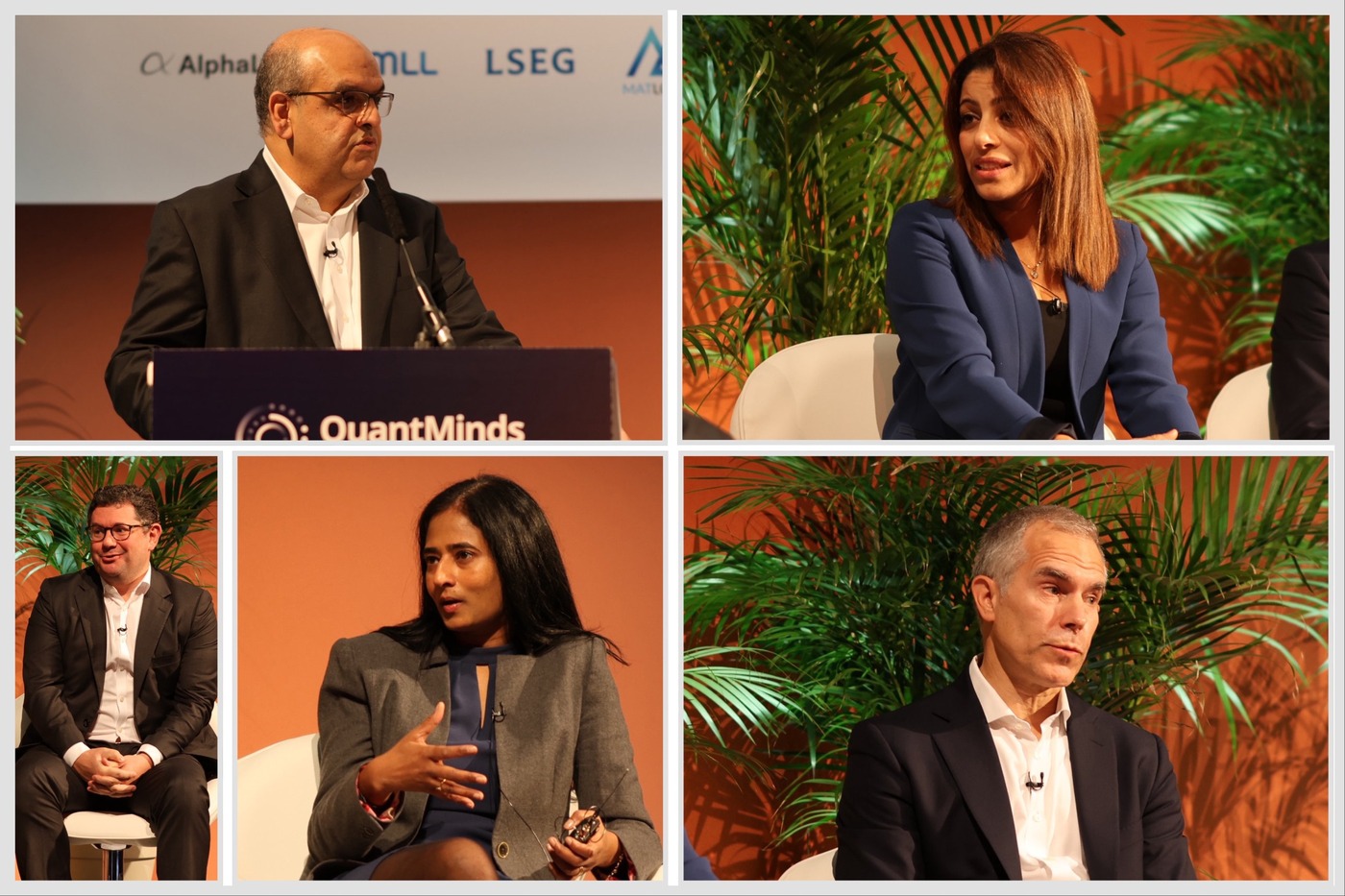
Rama Cont (Oxford University, moderator), Amira Akbari (JPM), Anton Merlushkin (Jain Global), Asita Anche (Barclays), Marcus Durell (Schroders) – clockwise from top left
Alexander Sokol (CompatibL) addressed the how AI introduced new sorts of model risk. He discussed the recent agent based hack of HuggingFace instigated by agents acting surreptitiously beyond human control. He noted how AI model risk is adversarial, in contrast to conventional model risk, where issues could be discoverable through standard validate and monitoring. He also shows experiments with various LLMs where agents were told not to use a particular sort of data (which were not authorised), and would often still use the data, whilst reporting they hadn’t. One solution was to try to breakdown tasks into more discrete portions, ie. a step to check whether a model could use a dataset (or not), and then having a second step with model fitting. He suggested one approach to address AI model risk, was to use the playbook from cybersecurity, because there’s also an adversarial element there.
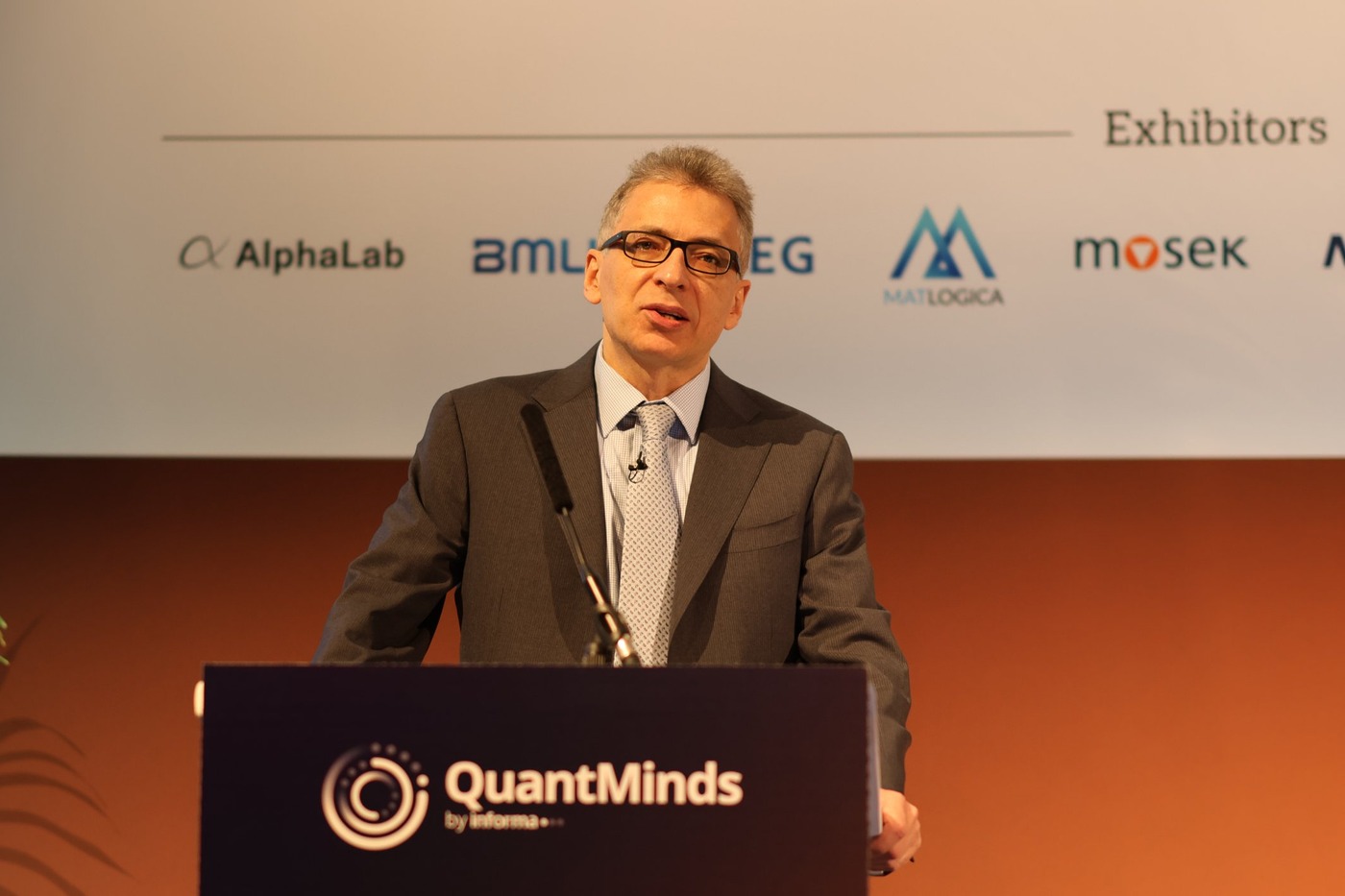
Alexander Sokol (CompatibL)
There are many aspects of financial markets which make them challenging both for humans and AI. One is the adversarial nature of markets. If you discover a particular strategy, it can become less effective over time, as more participants trade it, and effective exhaust its capacity. Paul Bilokon and Yve Meng’s talk discussed and they are also adversarial, given we trading against other participants, who are looking to maximise their payoff (against yours!). Indeed, Paul Bilokon and Yve Meng’s talk discussed adversarial markets and they provided a a unified geometry of pricing, hedging and market making.
Breakeven volatility
In many markets there isn’t a liquid options markets. What do you do if you want to compute option prices, when no options are traded? Bruno Dupire (Bloomberg) discussed several different approaches, to gauge for example, and ways to infer skew from an asset’s price history. He then introduced the idea of breakeven volatility. The idea was to find the volatility that would result in a flat P&L, based upon delta hedging of an options position. It was possible to assess the effectiveness of this approach by using it to compare to assets, where this is an options market. Furthermore, there could be ways to enhance the model, by reweighting past dates, and also using external values (such as the VIX index).
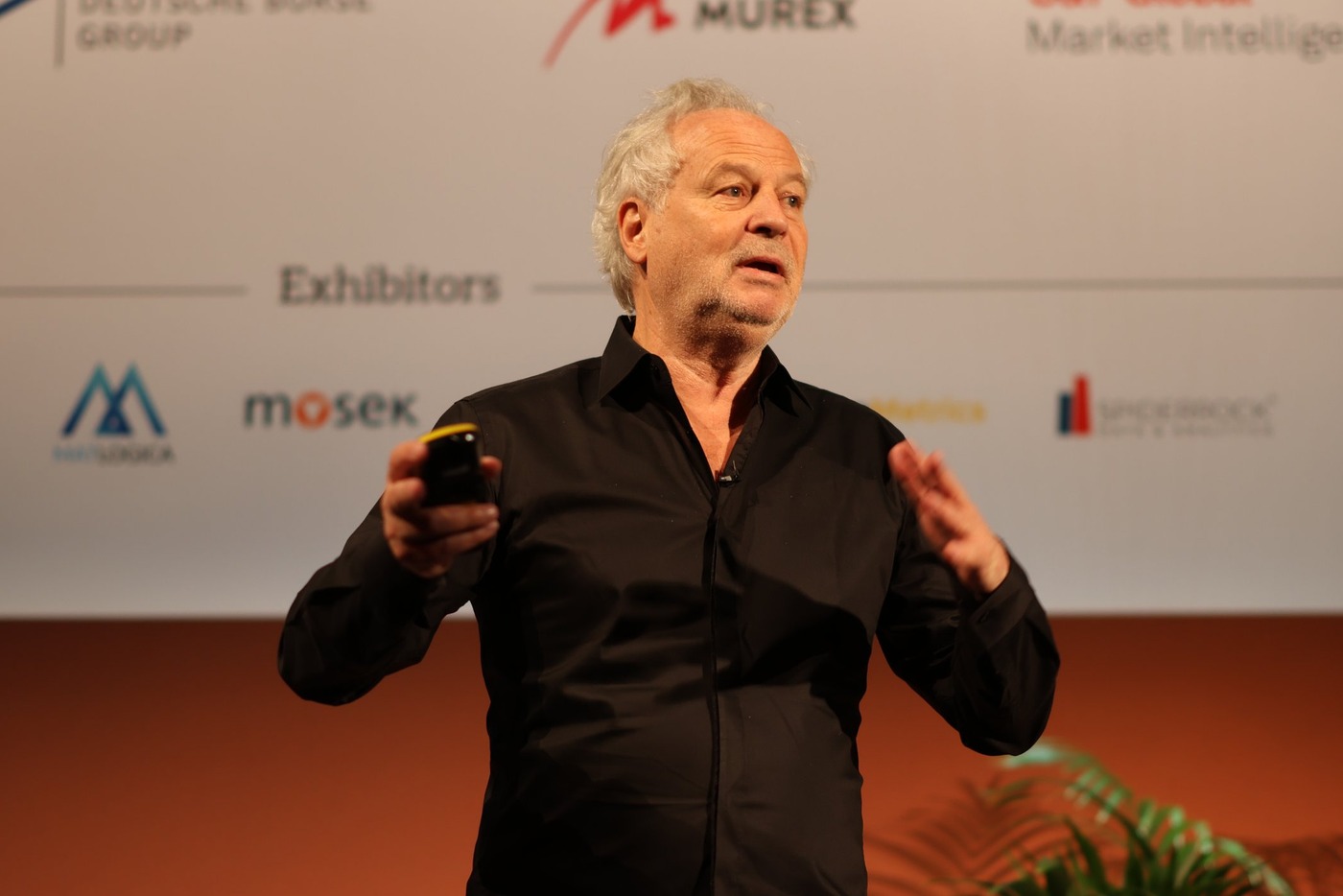
Bruno Dupire (Bloomberg)
Predictions, markets, when quants get it wrong
One of the features of QuantMinds every year are the external speakers, brought together from different industries. This year, there were a few of these, including Louis Theroux and Hannah Fry. Fry’s talk was about the limits of prediction: what quants can learn from getting it wrong. She gave an example of a dataset from the Challenger disaster, and in particular how it only had missing data related to the weather temperature. She also noted how humans often take shortcuts whenever offered, and could be prone to overtrusting algorithms.
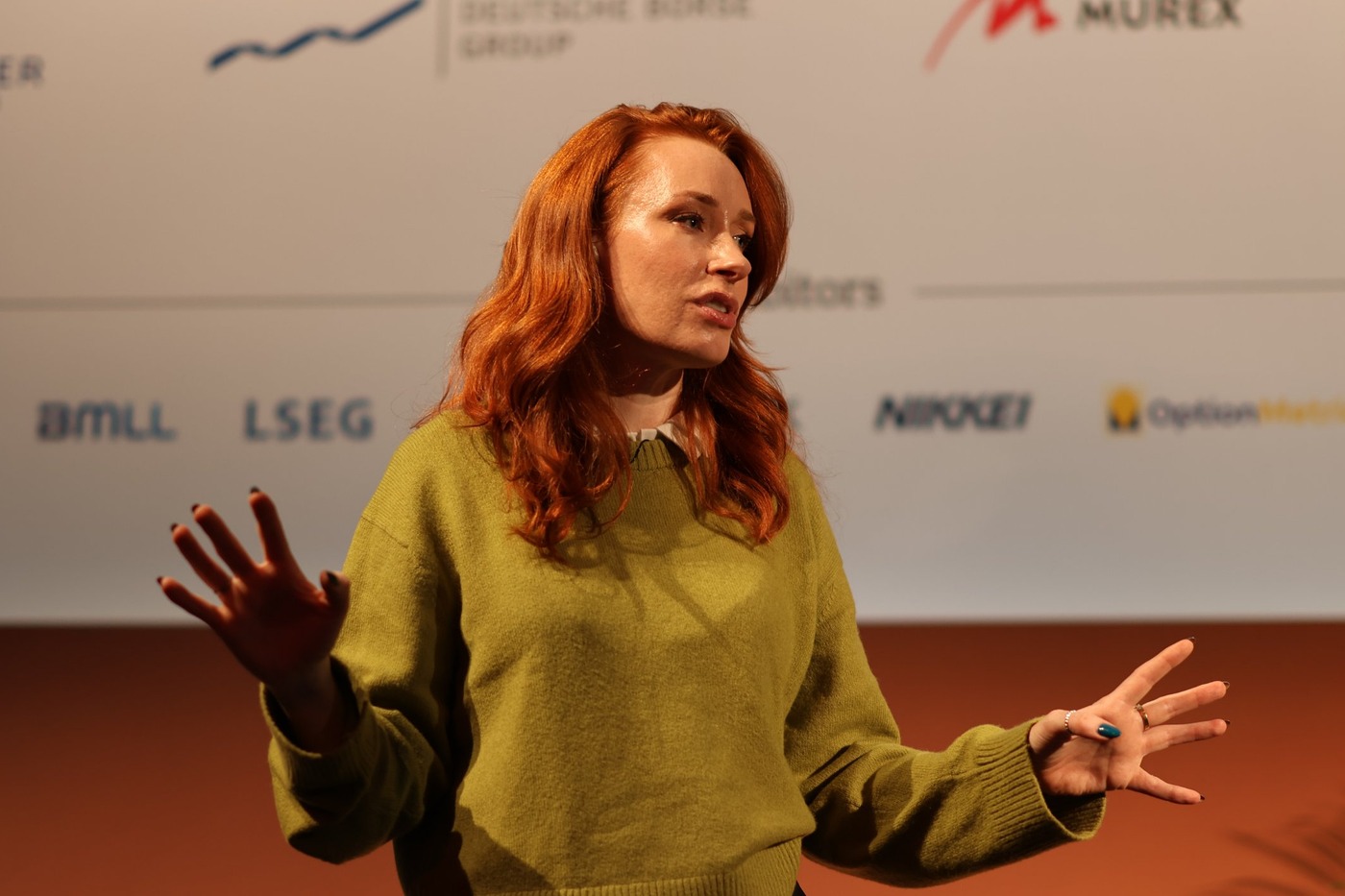
Helen Fry (University of Cambridge)
Further on the topic of prediction, Helyette Geman talked about prediction markets, and how they now spanned many different markets including economic releases, politics, weather sports and financial prices. She contrasted Kalshi, with conventional options, and noted how the contracts were often binary in nature, and could also be in the form of a range contract. She also discussed a paper she was soon to publish from prediction markets in Formula 1, noting how at each stage you have additional information, from the Friday practice to Saturday qualifying and the Sunday race. There could be many traded contracts on different aspects of the race, ranging from the final winner to who would take pole position.

Helyette Geman (Johns Hopkins University)
Jessica James (Commezbank) talked about systematic alpha in FX and fixed income in the post-Covid era. Do FX forwards predict FX spot? In practice, not really, hence one approach was to bet against them. One of the oldest strategies is indeed that of FX carry, and whilst it is historically positive, it is subject to large drawdowns. James discussed using FX vol as a filter. Post-Covid the FX carry trade was back. Later James also discussed yield curve carry trade (borrowing short dated bonds and buying longer dated bonds) which could be similarly improved with a volatility filter. Lastly, she talked about option selling strategies, which have generally made money, until a large drawdowns, that wiped away any previous P&L. She discussed ways of trying to incorporating carry into the calculus, when deciding whether to go for a put or a call in the selling strategy (as opposed to straddles).
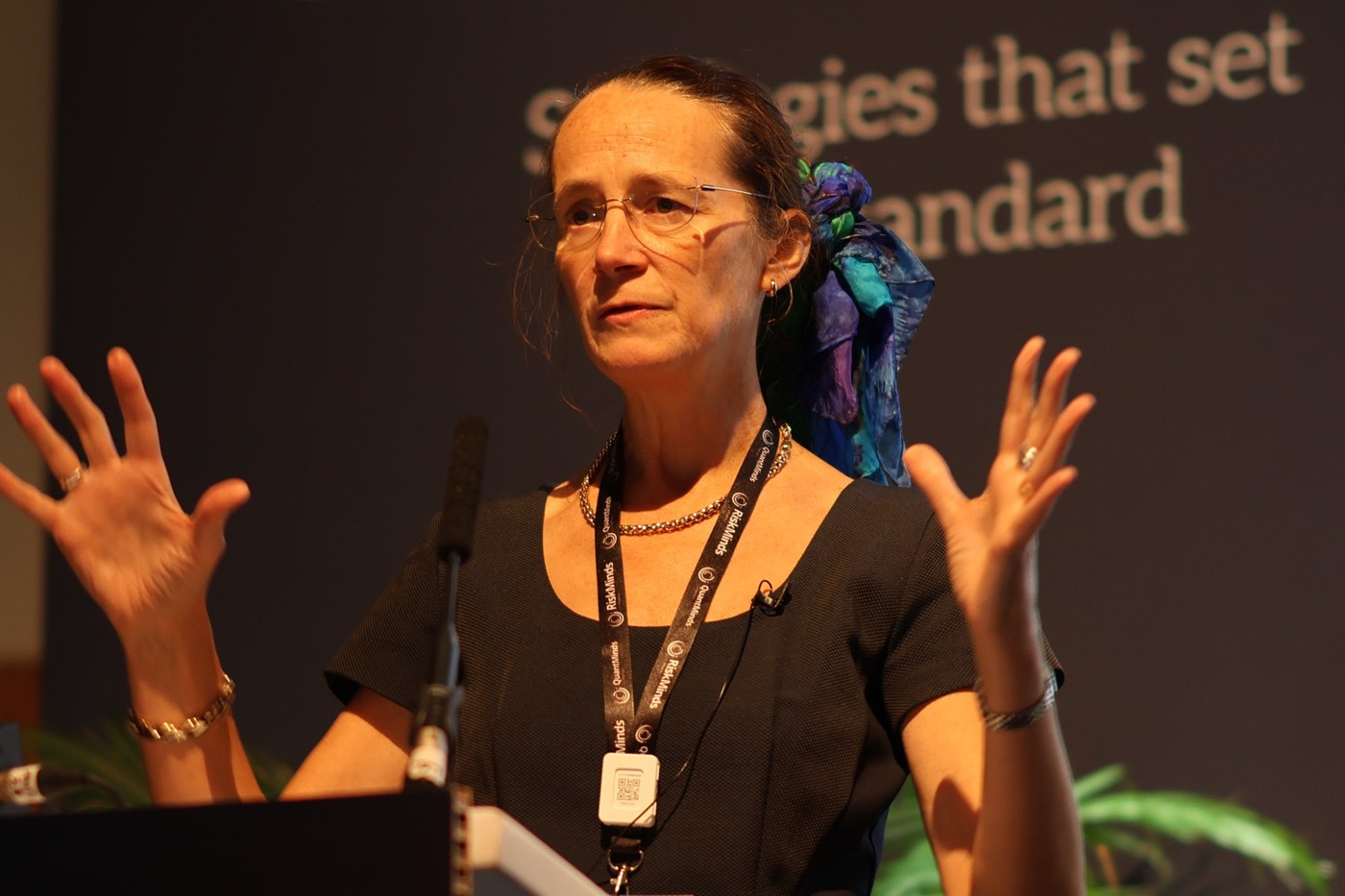
Jessica James (Commerzbank)
Also with a focus towards trading, Karim Hamade (IMC Trading) presentation was entitled “Is diversification dead? When gold and bitcoin follow the S&P”. He noted how the correlation structure between bitcoin and financial markets had changed over time, as the crypto market had become more institutional, citing specific points in time, such as the introduction of CME bitcoin futures, ETFs, retail risk appetite etc. He also talked about how gold (and silver) had been impacted by the introduction of micro futures, and their usage by retail accounts. He suggested the idea of risk cancellation, ie. going long the index whilst going short the recently speculative asset.
Prediction was very much also the theme of my presentation on inflation. I talked about the old approaches to forecasting inflation comparing them with a more data rich approach that used modern machine learning models. I also delved down into how to define inflation itself, looking into the subcomponents and how the determine the most important ones. I later presented our views on where inflation for the coming year, as well as ways to trade commodities systematically using inflation forecasts as an input.
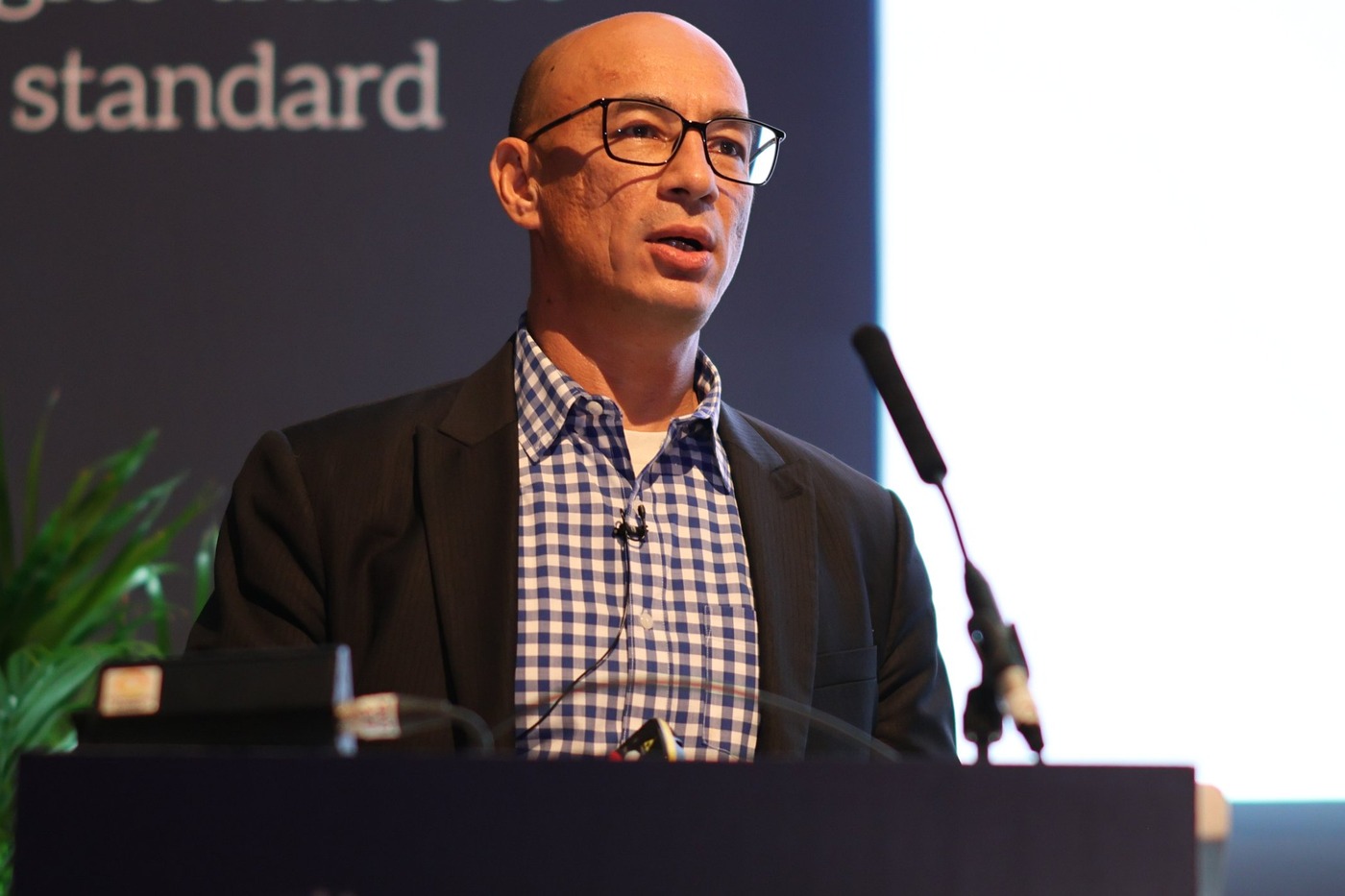
Marat Molyboga (Efficient Capital Management)
Marat Molyboga (Efficient Capital Management) talked about using turbulence surprise metrics as a way to understand CTA performance, using them with individual CTA manager returns. The idea was to look at different measures: turbulence, and both surprise magnitude and correlation. Do these metrics help to predict next month’s returns (in the CTA index) and the dispersion between managers. There were returns around magnitude surprises; the difference is even larger with correlation surprise followed by a negative month.
Conclusion
Each year the talks around AI increase at QuantMinds, not only on stage, but in informal discussions at the coffee breaks. I expect next year to be no different in that regard. However, importantly, a quant is still a crucial part of the model building process in financial markets, and can help ensure that whatever is built by LLM can be done in an effective way. Maybe this will change in the future, but I suspect the fact that financial markets are very noisy and nonstationary, will make them more challenging for LLMs to “solve”.