

“Be obsessed with data”, was probably the best line I heard all day at the recent Neudata data summit in New York. I went to my first Neudata event close to a decade ago in London. Over the years, the data scene has evolved. Then, alternative data was all the buzz. Today, whilst alternative data is very much still with us, and there are many more datasets, which might be considered as alternative, the prefix alternative, has perhaps become less fashionable. We’re back to just calling everything simply data, no matter whether it is is traditional or alternative. In this article, I’ll try to give my takeaways from the Neudata data summit. Whilst it is impossible to discuss every single session, I hope my article will nevertheless provide a flavour of the day.
One of the highlights of the day (title image), was Rado Lipus’ (Neudata) entrepreneur interview with Tammer Kamel (Anter Ventures), who was previously founder of Quandl and its CEO. Quandl was sold to Nasdaq in 2018, becoming Nasdaq Data Link in the process. The seeds for Quandl were planted when Kamel was a quant, and had been frustrated in finding data. Quandl was originally meant to be a Wikipedia for data, but it had been far too difficult. In the process, he had written many APIs for getting data from many sources, and hence started loading conventional data into the platform. However, it proved tough to get users to switch from their existing providers. He felt that to succeed, Quandl needed to sell something which was not on existing platforms, hence, Quandl then pivoted to becoming an alternative data platform. The process included finding these datasets, and evaluating them, whilst showing clients where the alpha was.
When Lipus asked Kamel to sum up what advice he had for data entrepreneurs today, he noted that data is more valuable than it has ever been. AI cannot synthesise facts, it needs data, and most importantly you had to be obsessed with great data. Having cofounded a data business with Alexander Denev, Turnleaf Analytics, I could relate to many of the points Kamel raised, such as the need to pivot, finding a space less travelled etc.
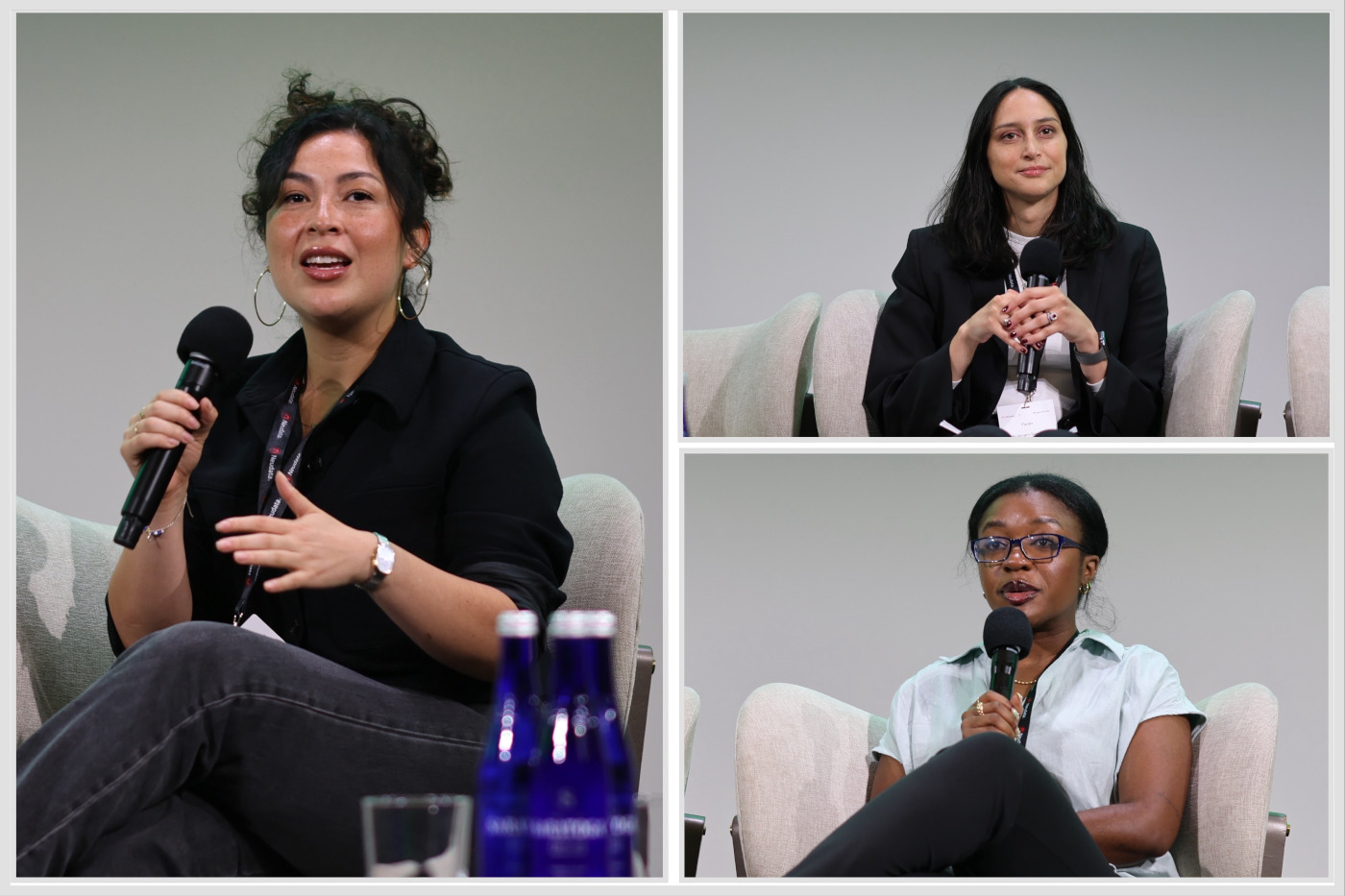
Farah Rathnam-Sandys (Neudata) – top right, Nicole Kusi (US Soccer) – bottom right and Claudia Iraheta (MLS) – left
There was a also a session taking us outside finance, looking at marketing to US football fans, moderated by Farah Rathnam-Sandys (Neudata) and guests Nicole Kusi (US Soccer) and Claudia Iraheta (MLS). Within financial markets, we’re interested in aggregation of datasets, whilst from a marketing perspective, folks are much more interested in understanding individuals, who is a fan and who isn’t. However, just as within finance, there’s appetite to use additional datasets to cover gaps in knowledge, in this case for example, vendors providing sentiment data.
AI perhaps unsurprisingly came up in many guises throughout the conference. Stephen Heller (Morgan Stanley) talked about using agents in the process of creating systematic trading strategies. The mechanical parts of the workflow have been getting cheaper, namely sourcing data, writing code, running backtests etc. However, he noted that the cost of verifying these results was not falling. He gave some examples, starting with a prompt to replicate a very common trading strategy (momentum), which seemed to work well. Perhaps not surprising, given it was likely to be all over the training data. When moving to a more unusual strategy, the output looked plausible, but in practice was riddled with mistakes. He suggested that one way to alleviate these issues was to introduce additional agents to check every step and flag errors.
Along the related theme of using AI tools in practice, Tavis Lochhead (Kadoa) chaired a panel with Nao Tian (Quantbot), Peter Di (SIG), Matei Zatreanu (System2) and Oleg Nusinzon (Columbia Threadneedle). The discussion noted how AI usage had reduced the amount of time spent in tasks like data cleaning, freeing up time to analyse the data itself. Some firms were adopting the strategy of encouraging token usage, effectively subsidising it. You could view the evolution of using AI, as a timeline starting with prompting, using agents and then effectively an autonomous approach to researching datasets.
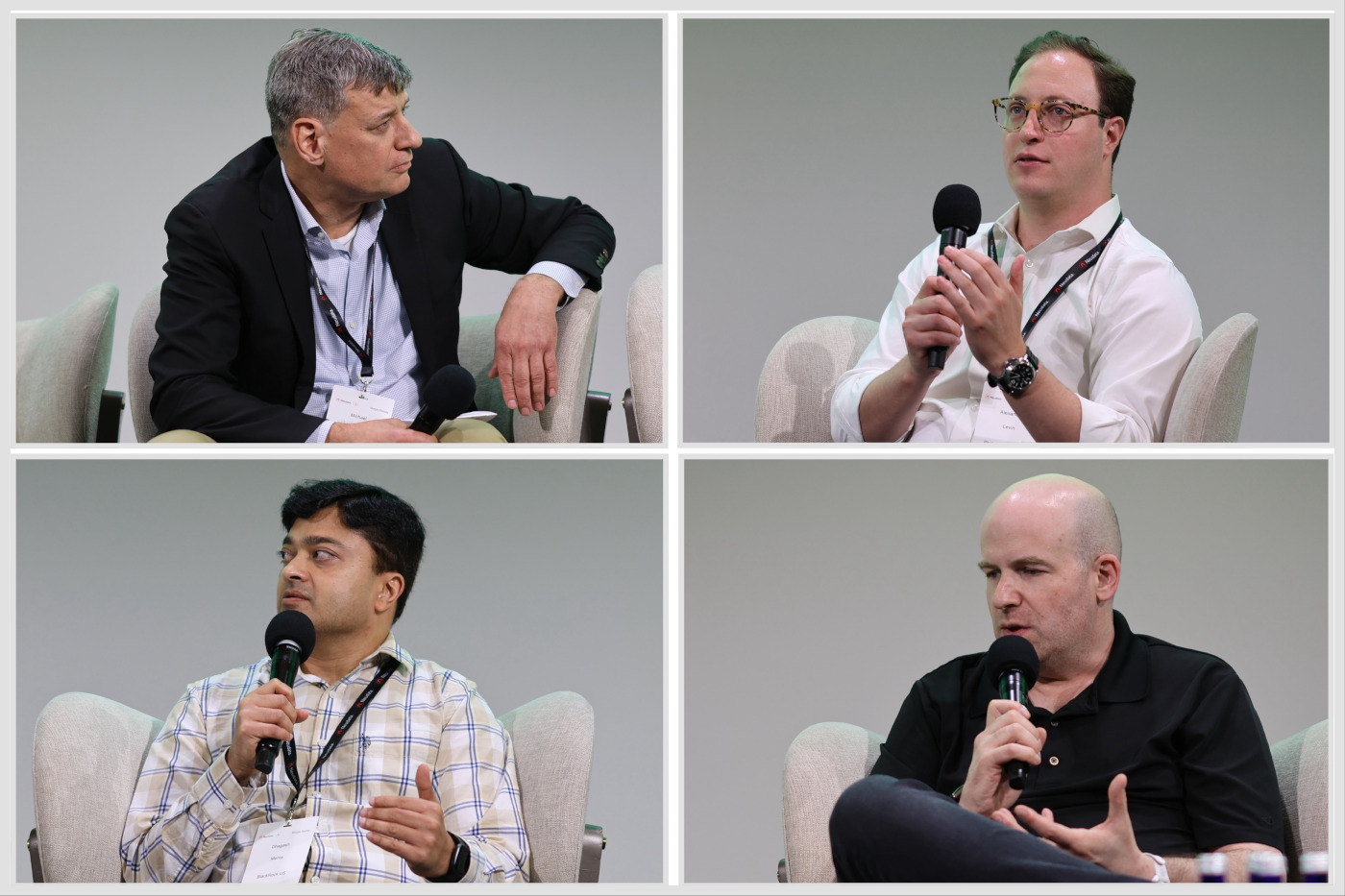
Michael Hejtmanek (Neudata) – top left, Dhagadh Mehta (BlackRock) – bottom left, Evan Reich (BWG Global) – bottom right and Alexander Levin (Plettenberg Capital) – top right
The question of the impact of AI on society is something that many of us are thinking about, in particular, who are going to be the winners and losers in this revolution. It is obviously impossible to predict precisely how this theme will play out, but it is nevertheless something we need to think about. Michael Hejtmanek (Neudata) moderated a panel to discuss this theme. His guests were Dhagadh Mehta (BlackRock), Evan Reich (BWG Global) and Alexander Levin (Plettenberg Capital). It was noted that the “moats” have changed, and some could be “walked over”. The biggest winners could be users, given AI has freed up their time. Investors can win too. However, people who get in too late, and increase their capex too late, could be on the losing side, as well as those who were reluctant to use AI in their job.
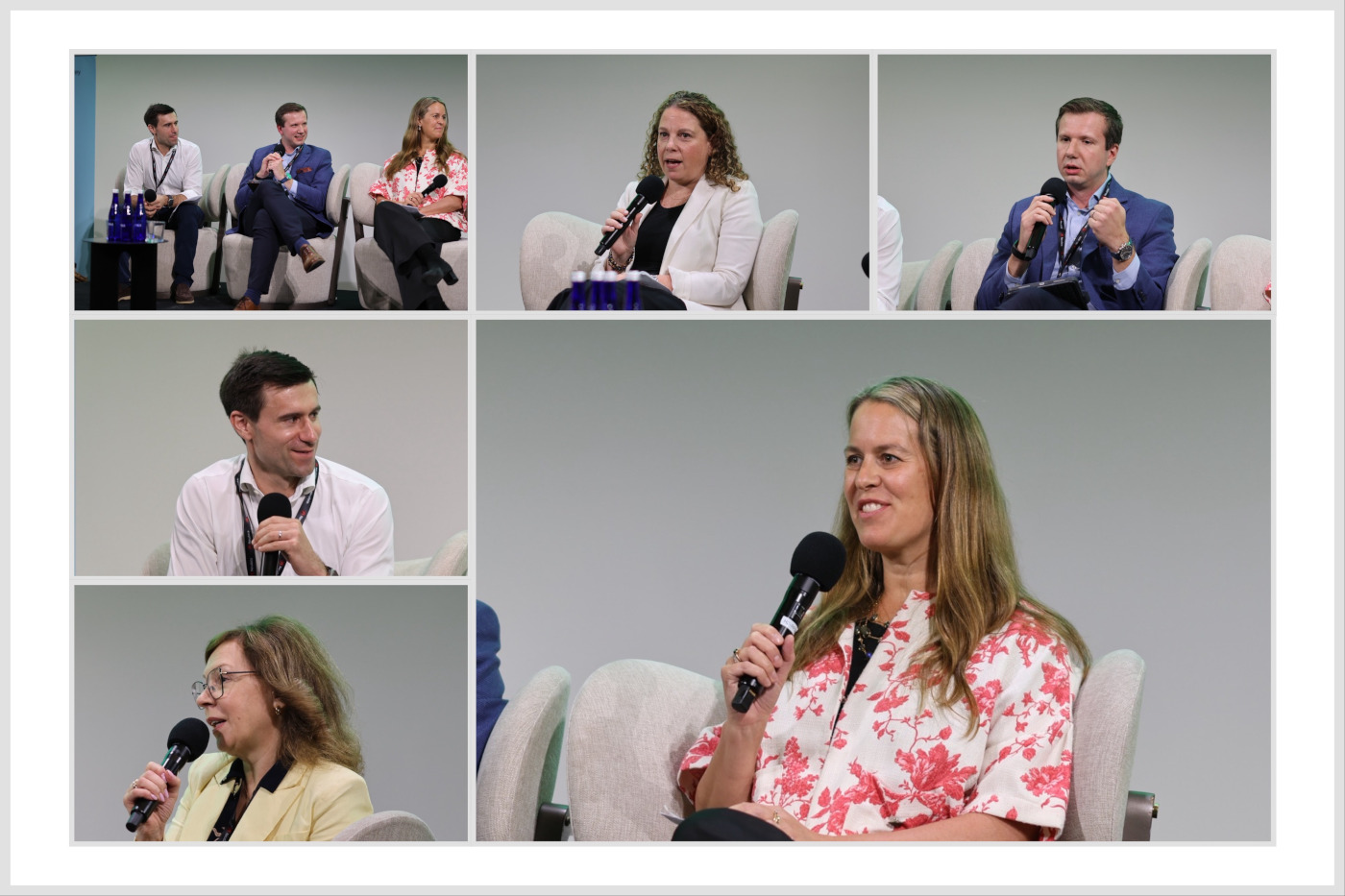
Rob Morse (PDT) – middle left, Natalya Dimtreyeva (formerly Two Sigma and Schonfeld) – bottom left, Carrie Anton (Jain Capital) – bottom right, Eugene Michele (WorldQuant) – top right and Eliza Raphael (Jump) – top centre
Over the past few years, the role of a data strategist has evolved. The hunt for new datasets is critical for buy side firms to keep ahead of the competition and find edges. Rob Morse (PDT) moderated a data strategist panel with Eugene Michele (WorldQuant), Carrie Anton (Jain Global), Eliza Raphael (Jump) and Natalya Dimtreyeva (formerly Two Sigma and Schonfeld) discussing what was driving alpha at present. It was noted that alternative data had transitioned to simply “data”. It was no longer purely about being the first to have access, but also how you used these datasets. AI had empowered individuals to do a lot more when it came to exploring the data. Although it was noted that at present LLMs didn’t do point-in-time data. And using LLMs “too fast” could result in datasets with bias (like lookahead) and a Sharpe that degraded live.
What will be discussed in the coming year at the next summer Neudata New York summit? Let’s see.. although I suspect AI will be making an appearance!