
It’s been more than 2 weeks since the US-Israel joint combat mission against Iran began and the conflict doesn’t look like its going to end any time soon. Iran is doing everything it can to resist U.S.–Israeli forces, including using military force and causing economic disruption. Specifically, Iran has blocked the Strait of Hormuz, which control the flow of almost 20% of the world’s flow of oil, shooting up Brent Crude prices over $100/barrel.
Given the uncertainty surrounding the duration of the conflict, several countries including France, South Korea, and China have discussed or already implemented measures to limit the inflationary impact of an oil shock.
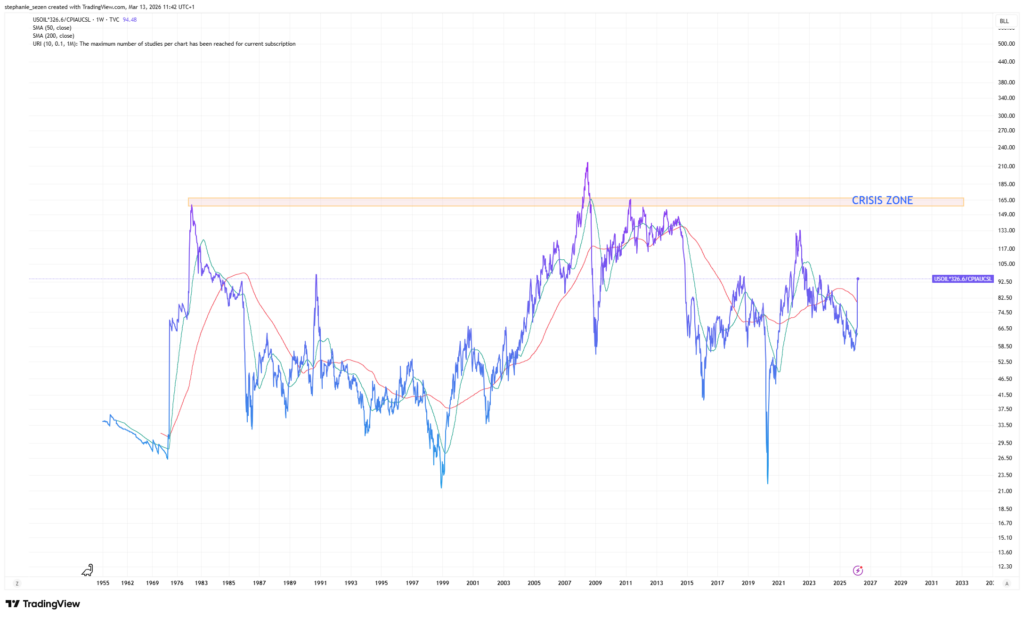
The duration of the war remains uncertain, and its long-term implications for inflation are still unclear. However, when we examine inflation-adjusted Brent crude prices, they remain below the levels observed during previous historical crises (Figure 1 – Source: Josep Pocalles). Brent crude prices may be rising, but they are still well below past crisis peaks.
Figure 1
At Turnleaf, we recognize that the pass-through from Brent crude prices to CPI is immediate in most countries and particularly strong where retail gasoline prices are largely unregulated (see our previous post on Brent crude pass-through here). In the United States, for example, pass-through is both strong and rapid, whereas in the Eurozone—where a tax wedge dampens price transmission—it is considerably more limited. Since February 28, 2026, Turnleaf’s proprietary fuel indices have recorded significant increases in retail gasoline prices.
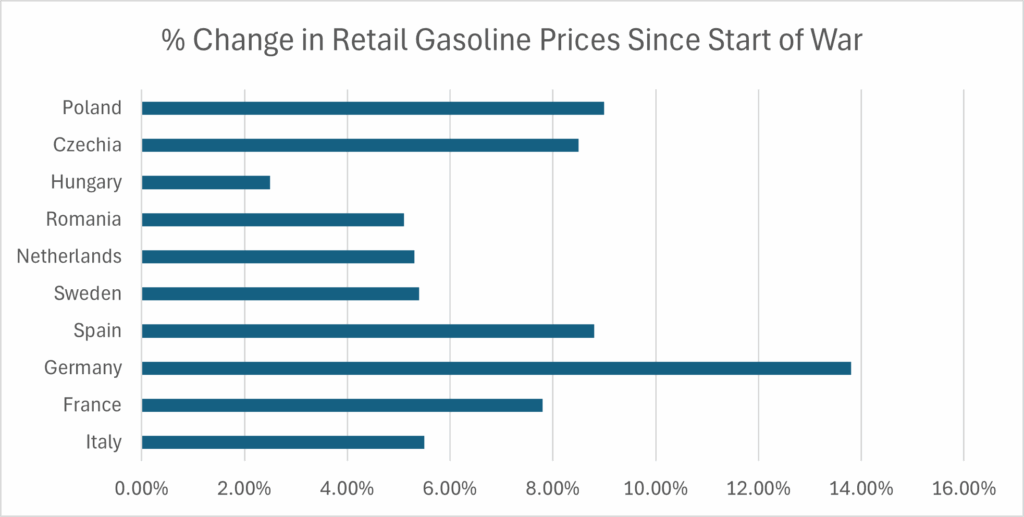
Below, we highlight the United States (Figure 2) and the Eurozone (Figure 3) as examples, both exhibiting a clear upward trend. Fuel effects are explicitly captured through our proprietary fuel indices across roughly 20 countries, which have steadily increased since the onset of the war. Figure 4 summarizes the widespread increases across EU countries, many of which have already seen upward revisions to our 12-month forecasts following the recent oil shock.
Figure 2
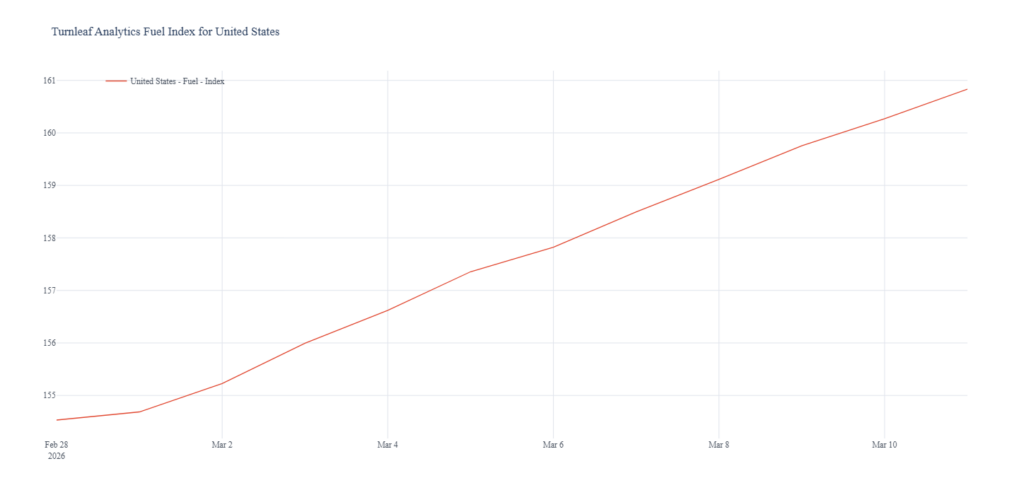
Figure 3
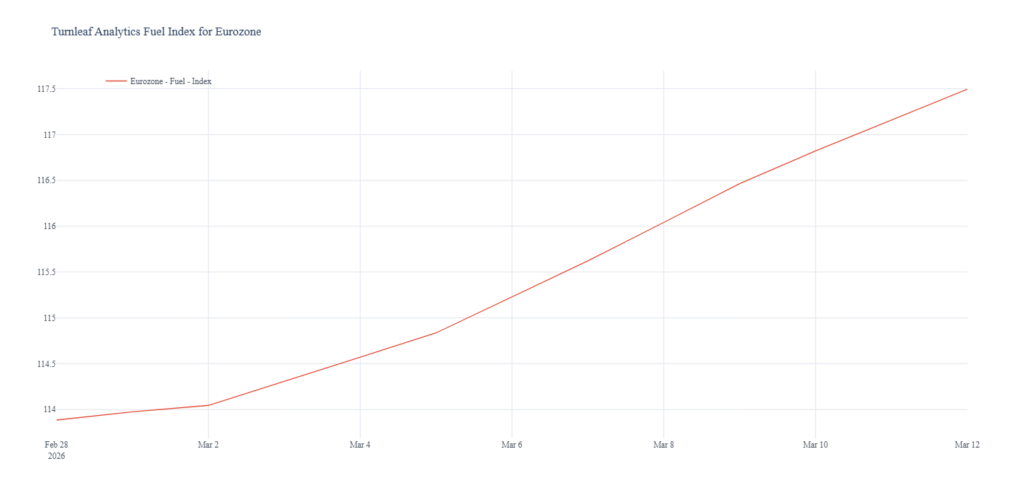
Figure 4
Other countries for which we also provide fuel indices like South Africa and Israel are expected to increase once regulatory prices are updated in the next month. As we collect more data and the situation in Iran becomes clearer, Turnleaf will update its inflation forecasts accordingly.