
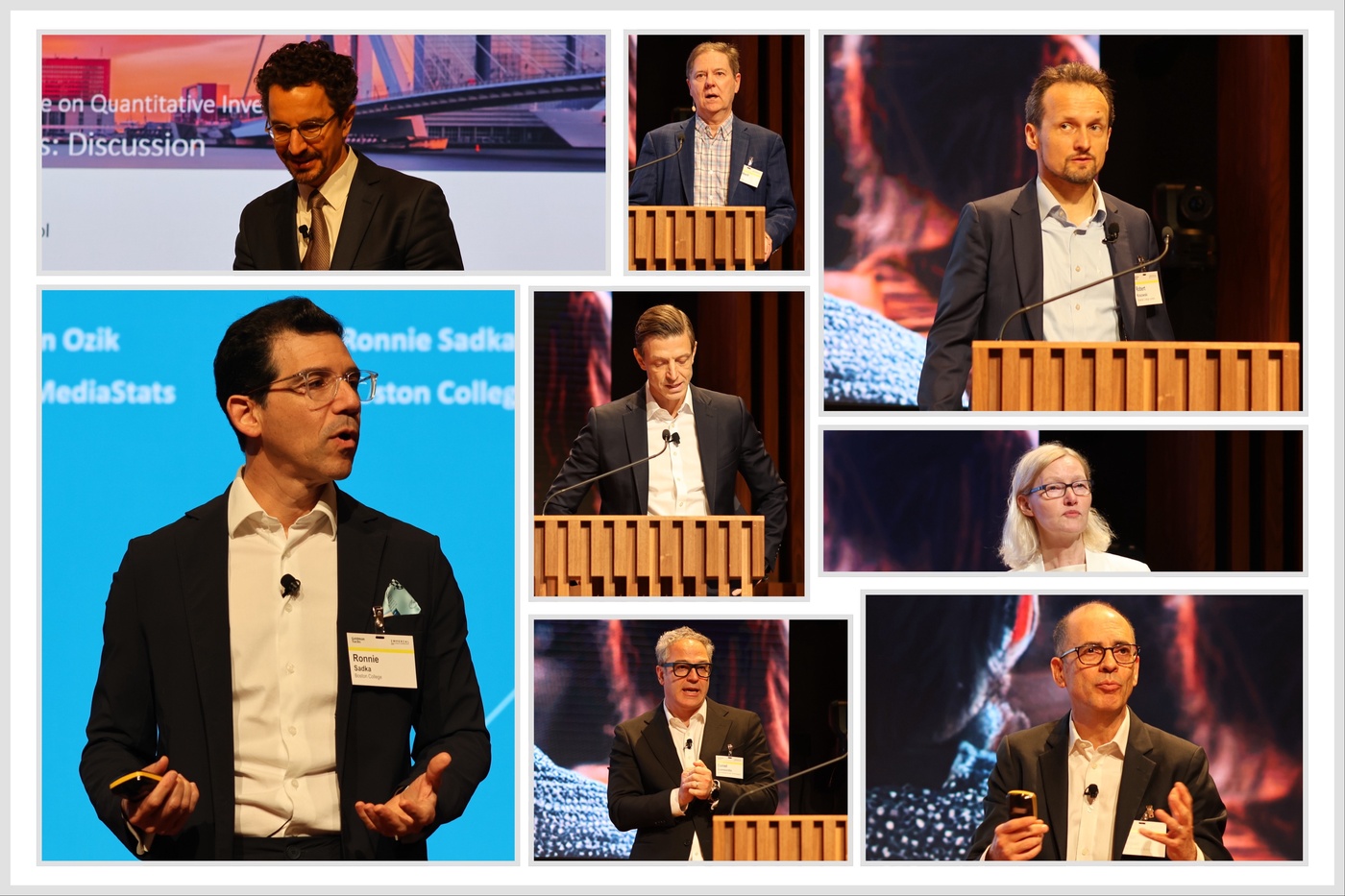
I’ve been to many finance conferences over the years, very often they are either focused towards academia or towards practitioners. The Imperial College hedge fund conference has tried to strike the balance between the two, with both theory and also a lot of practical applications. This year’s conference was held at Goldman Sachs and had speakers both from industry and academia.
End to end portfolio optimisation
I’ll try to write about some of my main takeaways from some of the presentations. The day featured a mix of topics ranging from portfolio optimisation to understanding narratives. Campbell Harvey (Duke) began the day presenting on “Machine Learning Meets Markowitz”. He noted that the usual approach for portfolio construction was a two step approach, creating a forecast (of returns and the covariance matrix), before plugging it into an optimiser. However, not all forecasts are creates equal, and indeed investors have a preference for more precise forecasts in those assets which are more likely to end up in their portfolios. He presented an approach which used a decision aware framework, and an end-to-end neural network to go from the data to the weights in one model. Using an example looking at China A shares, the end-to-end approach worked well, against other approaches historically.
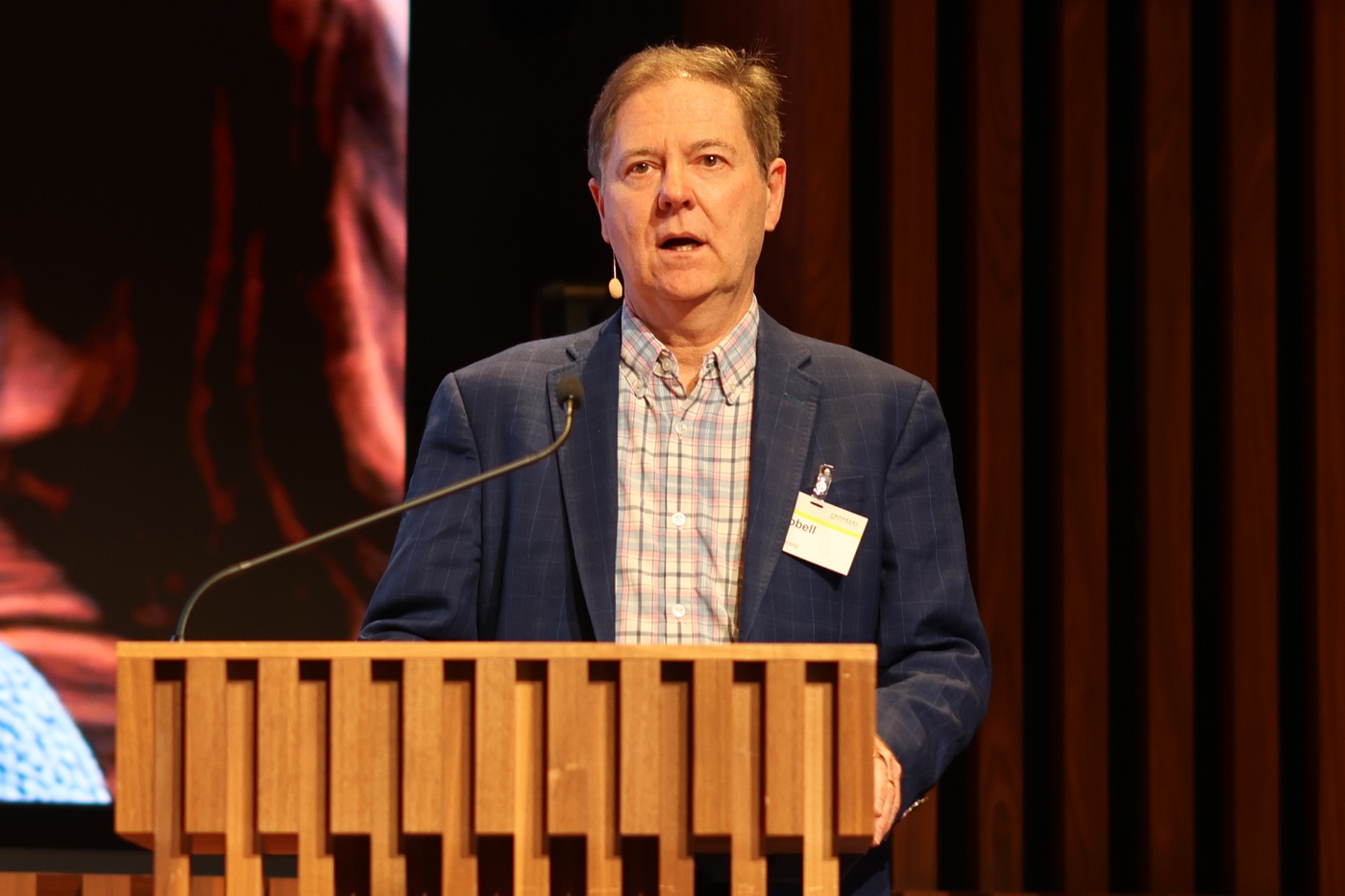
Campbell Harvey (Duke)
Quantifying prestakes
Surveys often deviate from outcomes in financial markets, but can we break down the errors? Sydney Ludvigson (NYU) discussed the idea of “prestakes”, predictable mistakes, in the context of stock markets. The idea was to understand how surveys differed from what’s implied from the canonical standard of full information of the market. In other words, is there is a gap between surveys and information already out there in the market. This is different to assessing the ex post forecast error.
Her approach was to remove the human element and instead use an algorithm to process large amounts of information to forecast, using machine learning to make stock market projections without lookahead bias. Indeed, the approach resembled the approach we use at Turnleaf Analytics for forecasting inflation. The idea was to decompose forecast errors in surveys into prestakes and ex post errors. Typically, during crises, the prestake errors were the largest. There was inefficient selective attention, whereby earnings analysts are excessively attentive to earnings-related news and inattentive to broader macro data. Surveys often tended to exhibit a local mean, and had recency bias. She found that the machine learning based forecasts tended to be positively correlated with subsequent returns, and the prestakes bias metric was negatively skewed.
Narratives, themes and event premiums
Markets move based on narratives. Ronnie Sadka (Boston College) research looked to quantify economic narratives by looking at the news. He noted that it takes time for narratives to filter through, and there can be investor under-reaction to economic narratives. He used a source stretching back over 10 years, examining hundreds of narratives, looking at quantitative vs. non-quantitative as well as evergreen (eg. inflation) vs. temporary (eg. COVID). From these he constructed a cross sectional narrative equity portfolio based upon 350 narratives, sorting by the growth in attention. He noted that those stocks with rising narrative attention outperformed those with declining attention.
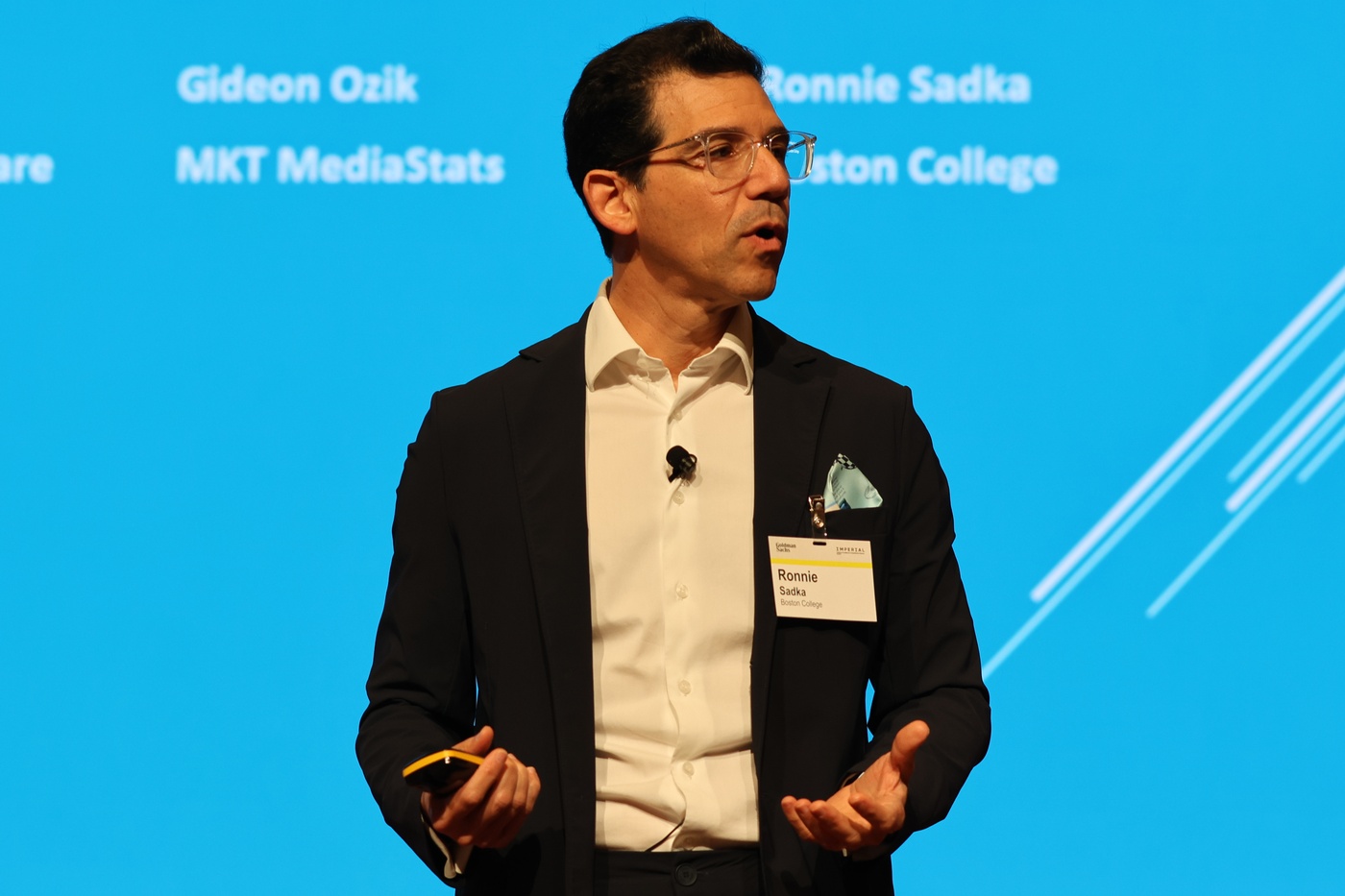
Ronnie Sadka (Boston College)
Wai Lee (Allspring Global Investments) presented about the idea of themes. He defined themes as emerging, transient and local, whilst factors are more established, persistent and pervasive. He also talked about how narratives can be a way to make themes visible. There can also be overlaps between themes and factors.
There are many scheduled events that impact financial markets. Whilst, we obviously don’t know the precise outcome of these events, the timing at least also the market to price in their expectations. Annette Vissing-Jorgensen (Federal Reserve) talked about equity premium events, quantifying those events which have ex-ante premium embedded into them. She used option implied proxies on S&P 500, which have predictive power for equity premium. Based on a sample from 20116-2024, 43 statistically significant forward premia events were identified: FOMC (14), CPI (10), NFP (7), elections (8), plus a recent addition (NVIDIA earnings). There is also an accompanying website https://www.pricingthecalendar.com/ which shows the ongoing premium on a live basis for these various events.

Annette Vissing-Jorgensen (Federal Reserve)
In all, it was a very enjoyable day and I very much look forward to seeing what will be discussed at next year’s event.