
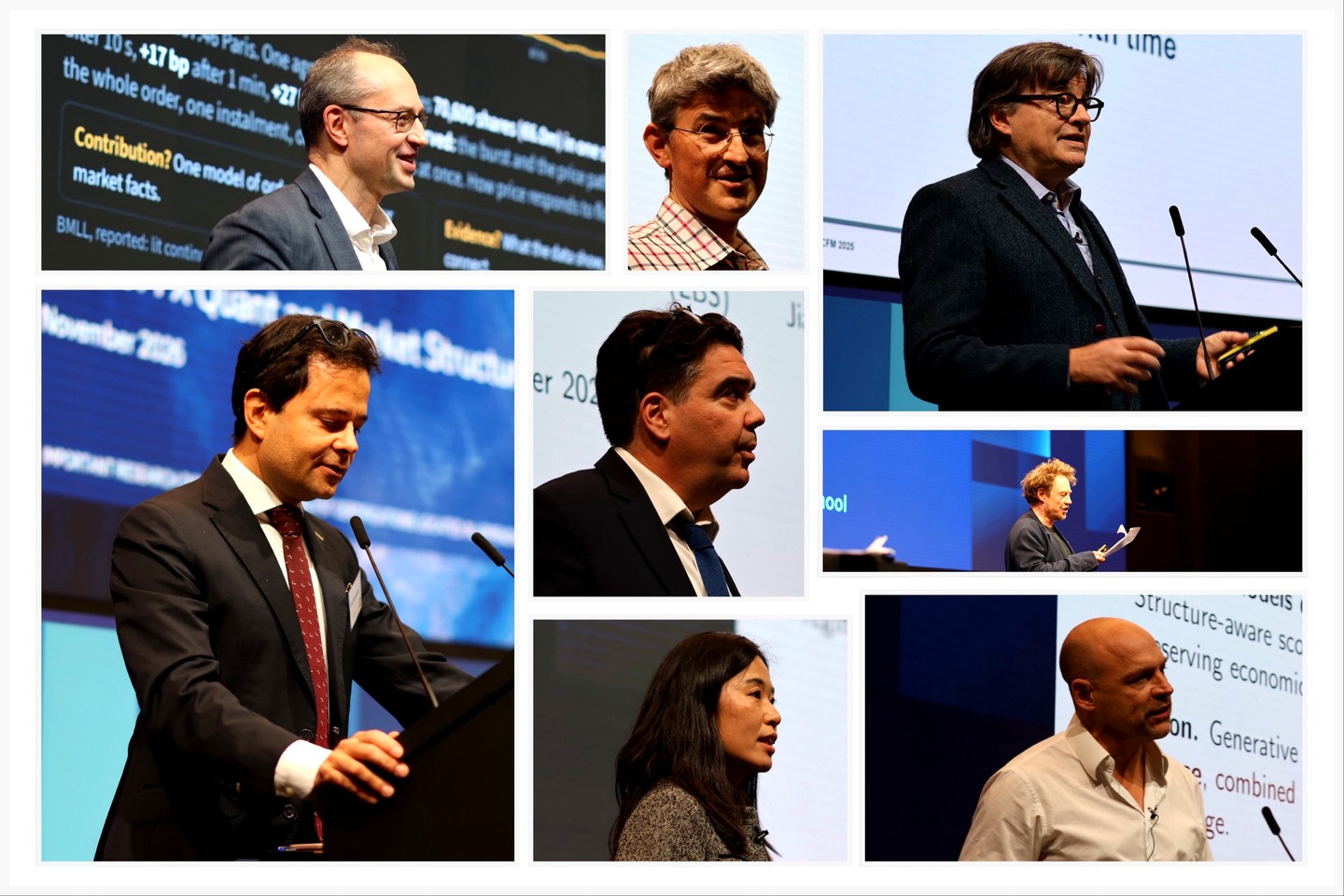
Nearly a decade ago, I attended the Market Microstructure conference which was a few hundred metres from CFM’s Paris office. I attended this week’s iteration of the same conference, now organised by CFM and Imperial College at Deutsche Bank’s new Moorgate office. In this article, I’ll discuss some of the takeaways from the sessions that I attended. To keep things brief, I’ll give a brief snapshot of the event, but I hope it will give readers a flavour of the topics discussed at the conference.
Market Microstructure
The event began with a talk by Jean-Philippe Bouchaud cofounder and chairman at CFM, adjunct professor at École Normale Supérieure and co-director of the CFM-Polytechnique Chair of Econophysics and Complex Systems at École Polytechnique. The crux of the presentation was answering the question of why do prices move. One answer is to the Efficient Market Hypothesis. However, this leaves several puzzles, notably the excess volatility puzzle and the excess trend puzzle. An alternative viewpoint, using a microstructure perspective, is that flow impacts prices. He noted that order flow (even when uninformed) follows the square root law of impact, and order flow is a long memory process for futures or stocks. He suggested that volatility can be entirely explain by the square root impact of a soup of correlated orders and that whilst volatility is a high frequency phenomenon it is then propagated down to lower frequency vol.
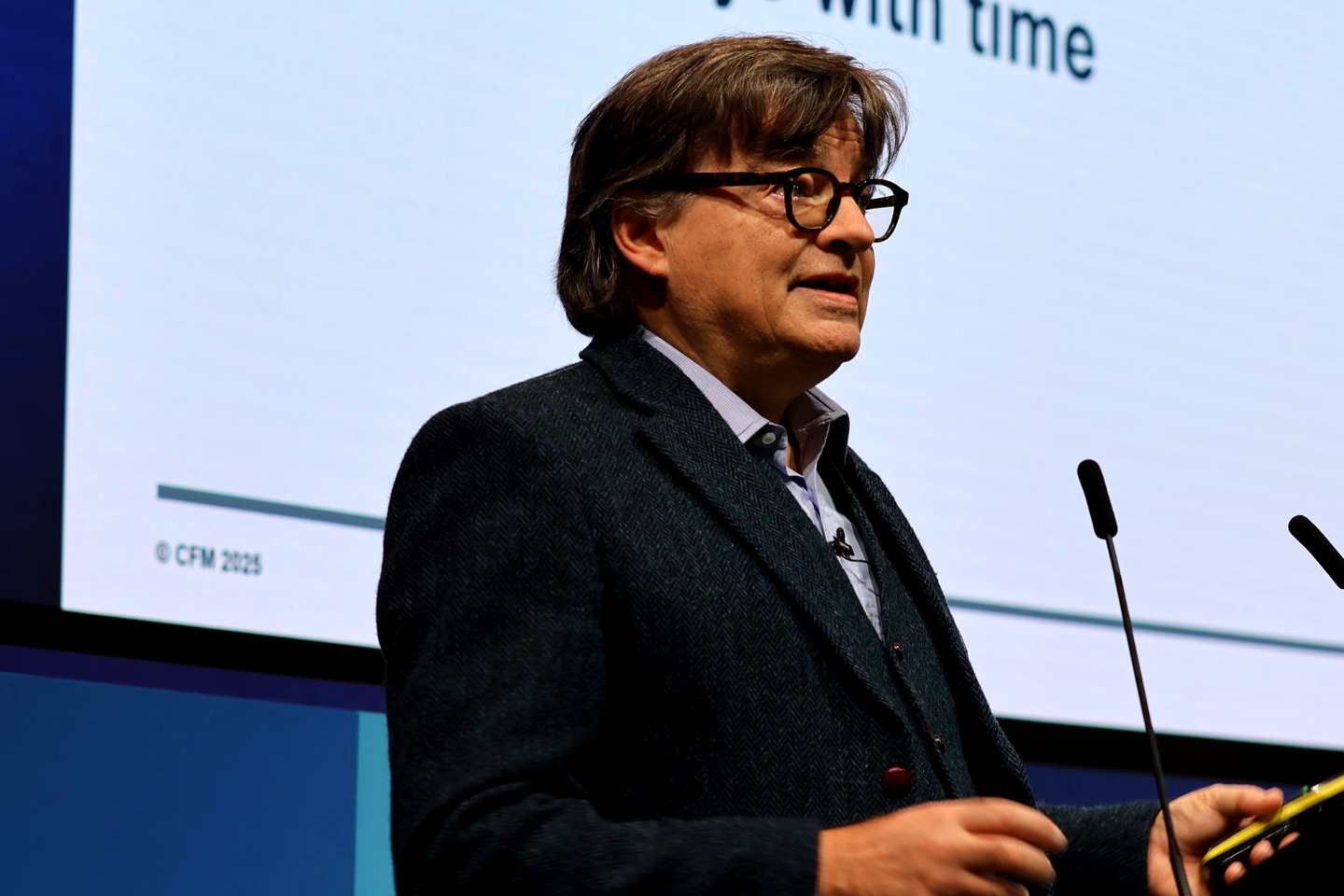
Jean-Philippe Bouchaud (CFM)
Mathieu Rosenbaum (Université Paris-Dauphine) discussed a unified theory of order flow, market impact and volatility. When it came to prices and they are diffusive and rough, but there is less known about order flow. High vol occurred when there is a lot of trading, whilst low vol when there isn’t much trading. If you looked at unsigned volume, it very closely resembled volatility sample path. However, when you looked at signed volume, you can note that there is long memory in order flow, and it looks smoother like fractional Brownian motion. He also discussed the notion of core order flow and how it related to prices and volatility, and used that to link to volume, volatility and impact.
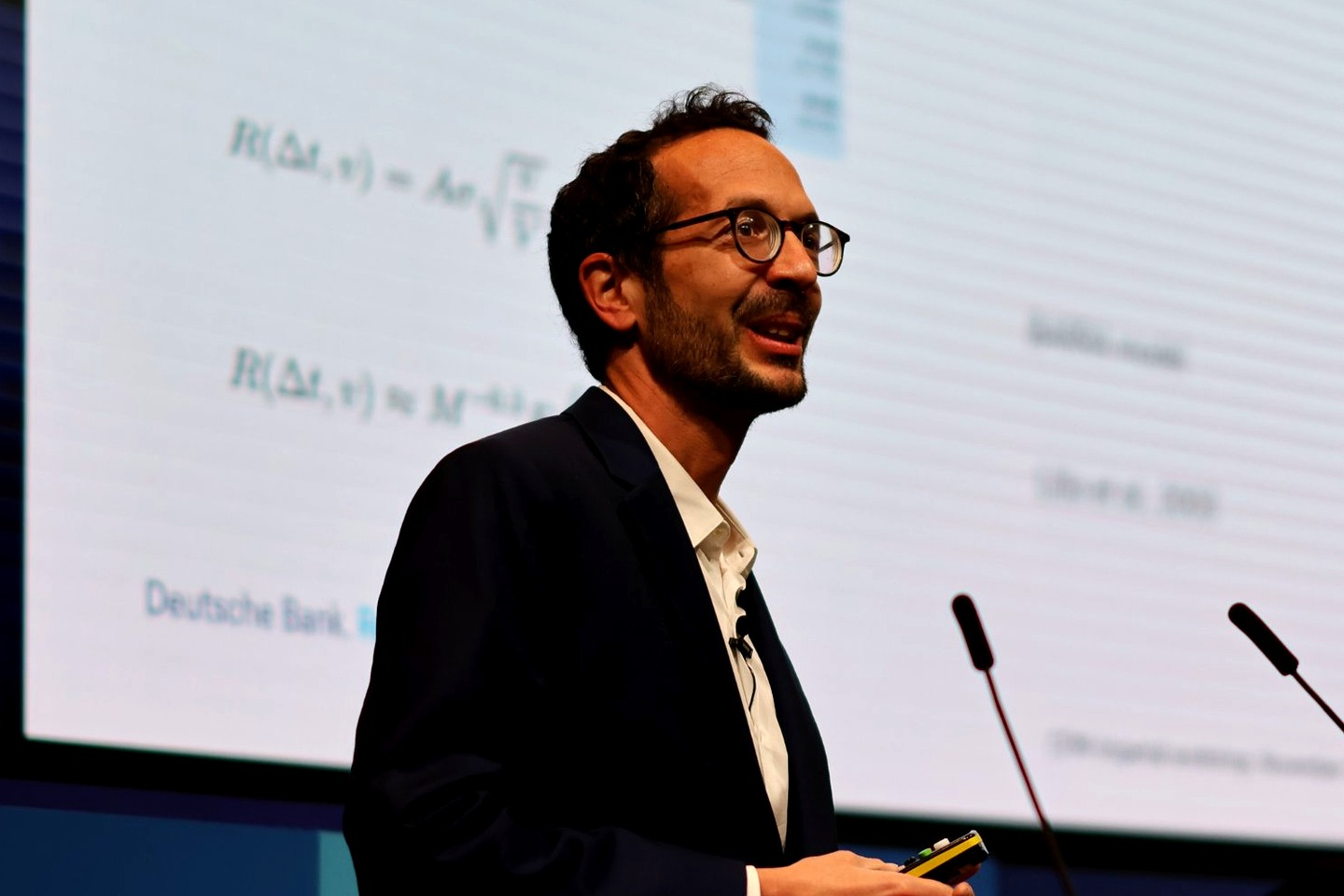
Mathieu Rosenbaum (Université Paris-Dauphine)
Alexei Jiltsov (TradeFeedr) was a discussant on Rosenbaum’s paper. He flagged that there are people who trade for a reason vs. people who trade for a flow. He noted that Rosenbaum’s model, was trying to explain four facts: signed flow, unsigned flow, volatility and market impact. Signed flow is persistent and steady day by day.
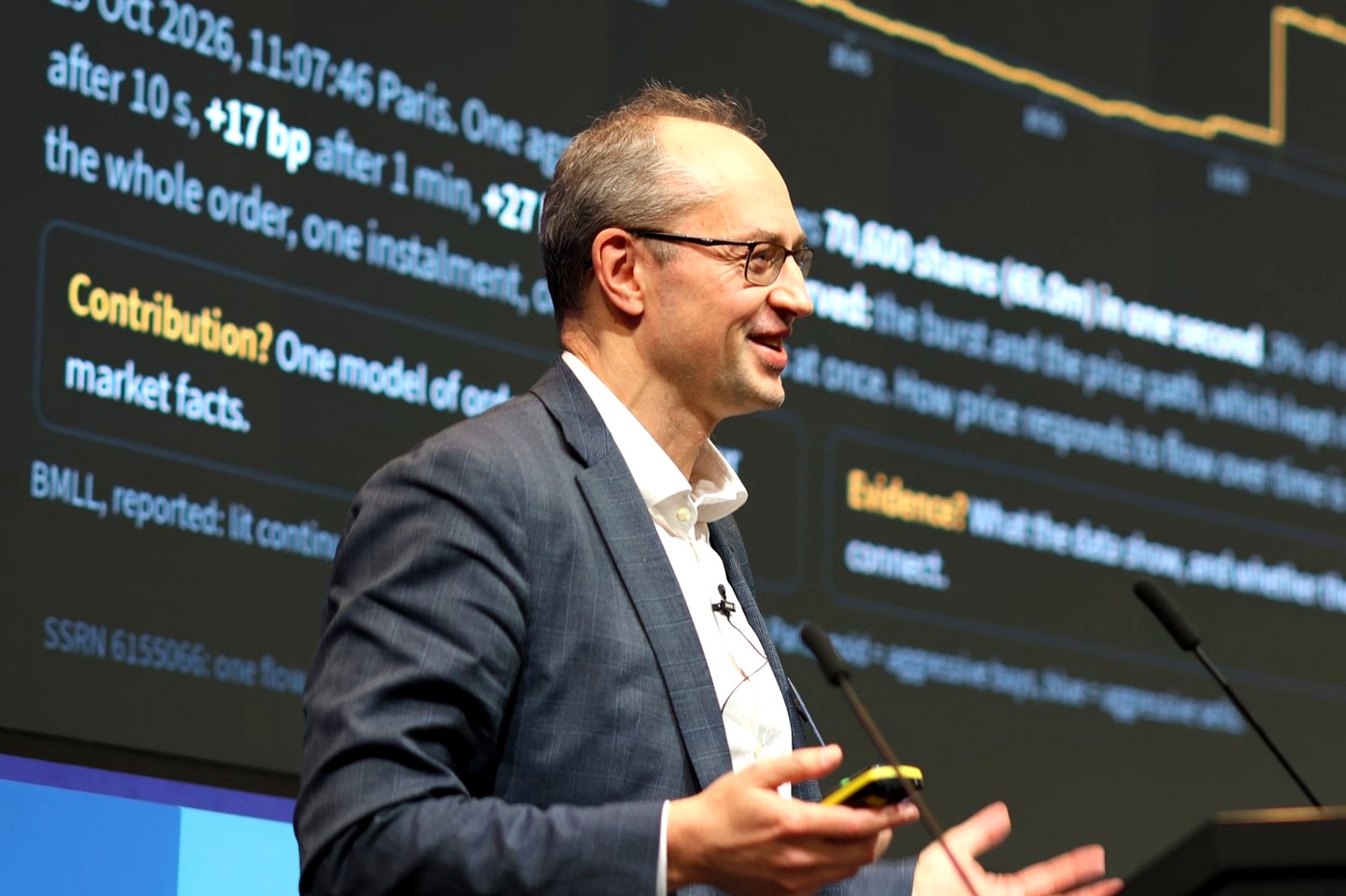
Alexei Jiltsov (TradeFeedr)
Macro based ideas
The Deutsche Bank research team presented a number of papers. Rohini Grover (DB) focused on FX, looking at extract signals for trading currencies based on concepts like order flow and positioning. She noted that FX is a large market, but is also decentralised and opaque. Trading motives differed between participants. Corporate liquidity seeking (non financial players), represented around 60% of flows, whilst profit seeking accounts were around 40%. She discussed how different types of accounts could give a contrarian signal, whilst some tended to be more trend following. On the commodity side, Luiz Silva (DB) talked about signals for trading commodities, across market risk and fundamentals, positioning and flows and lastly news sentiment. He suggested combining signals to improve performance across multiple sectors in commodities.
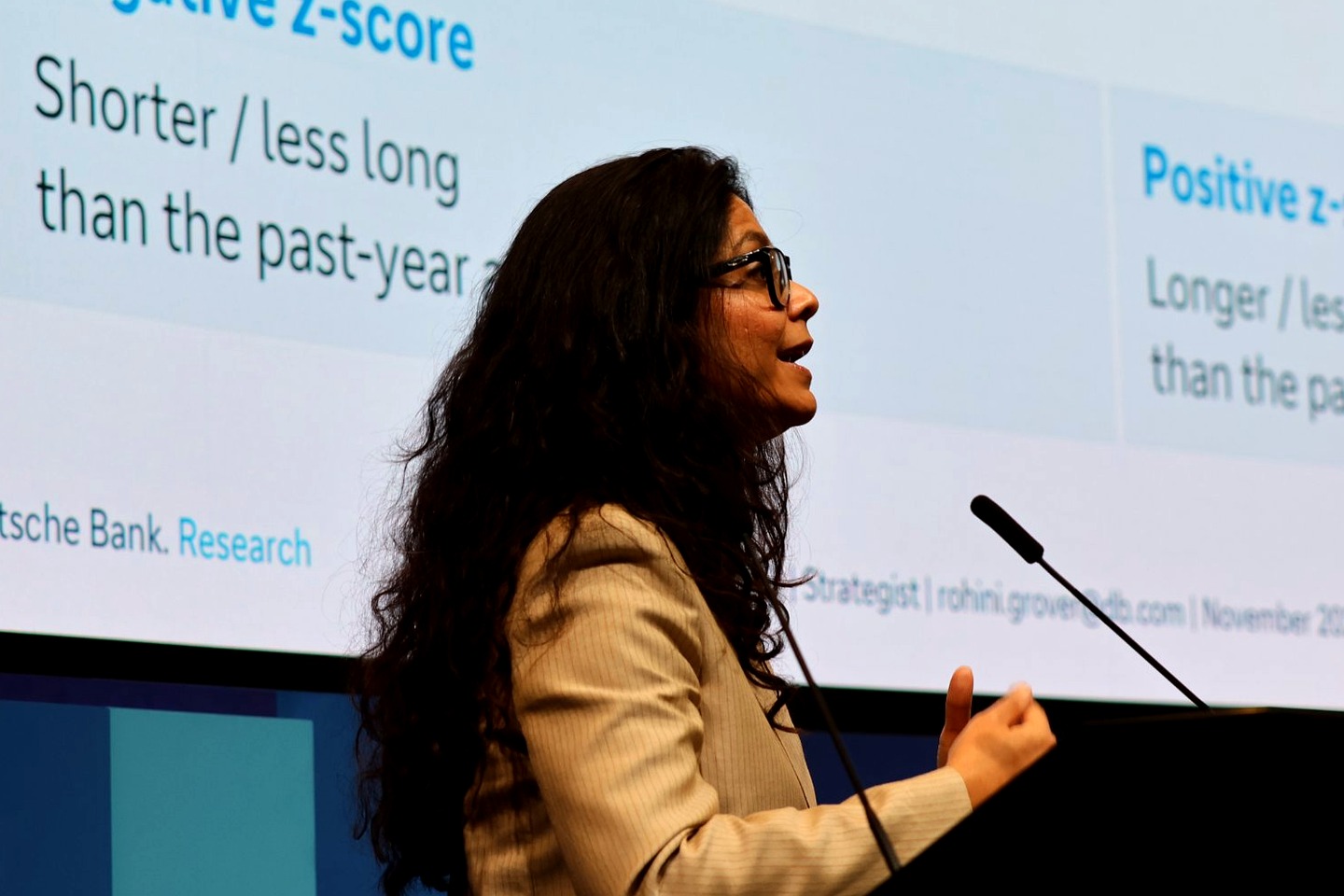
Rohini Grover (DB)
A macro angle
Svetlana Bryzgalova (LBS) presentation was entitled Macro Strikes Back. She noted that investors demanded compensation for bearing compensation for bearing macroeconomic risk. Hence, metrics like GDP growth should be priced. One approach, using macro returns to explain returns often didn’t work, because the signal could be small at very short horizons. I would note that perhaps there is an exception when it comes to jumps around economic data releases. She instead suggested using a large cross section of returns to identify priced shocks, and then trace how these shocks propagate through the macroeconomy. The idea was to model each macro variable as a function of its priced components: time varying risk premia. When evaluating a model, you should consider the entire term structure, not just one horizon.
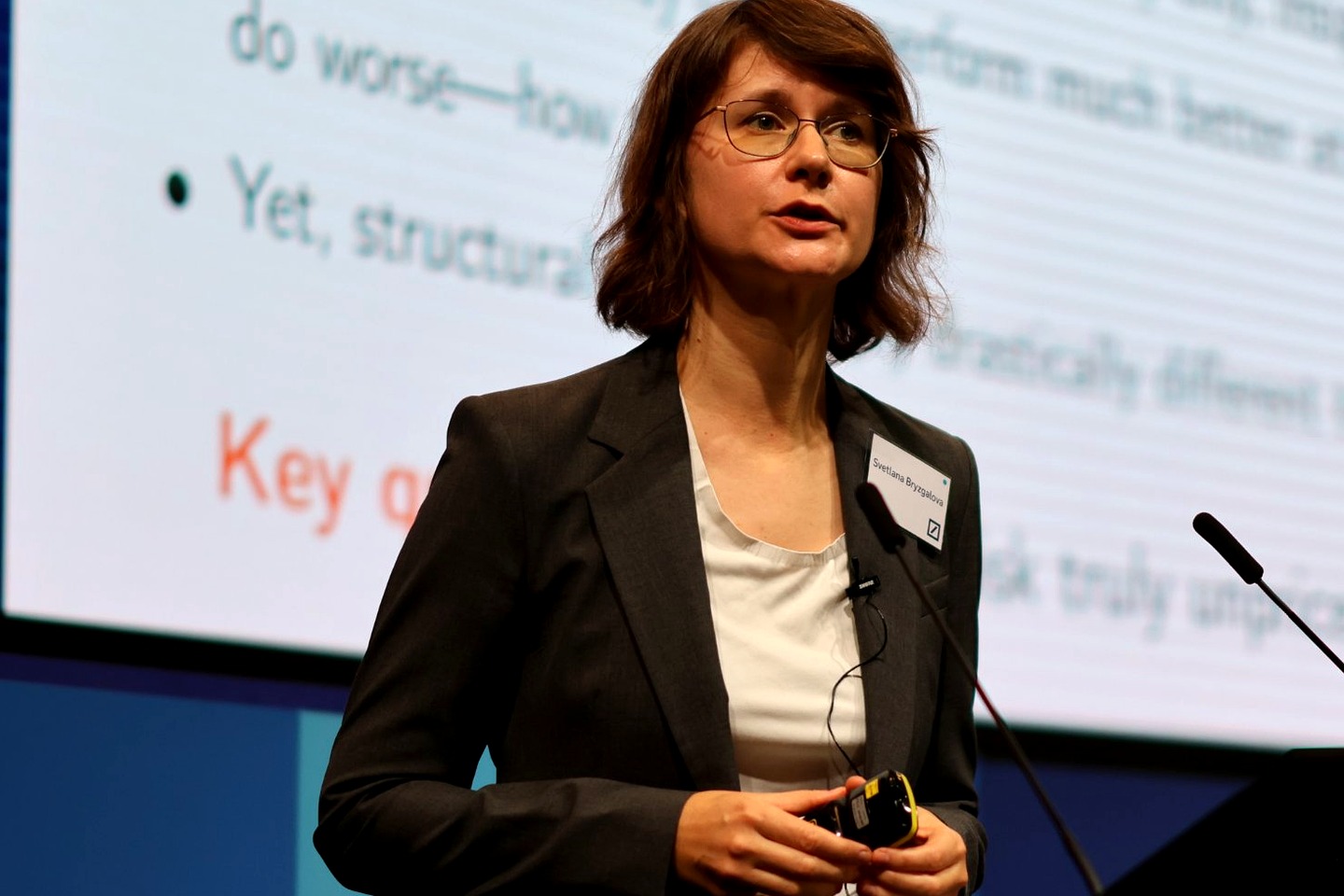
Svetlana Bryzgalova (LBS)
Where are we in quantum computing now?
Thomas Bromley (Quantum Motion) discussed the current state of play in quantum computing. He noted that there are several different ways of building a quantum computer, but as yet there isn’t a winning modality and each had particular drawbacks: superconducting circuits; silicon spins; trapped ions; neutral atoms; photonics. Whilst it is early days, when it comes to active use in commercial problems, there are some applications in finance, such as quantum Monte Carlo, linear algebra, quantum assisted ML and AI.
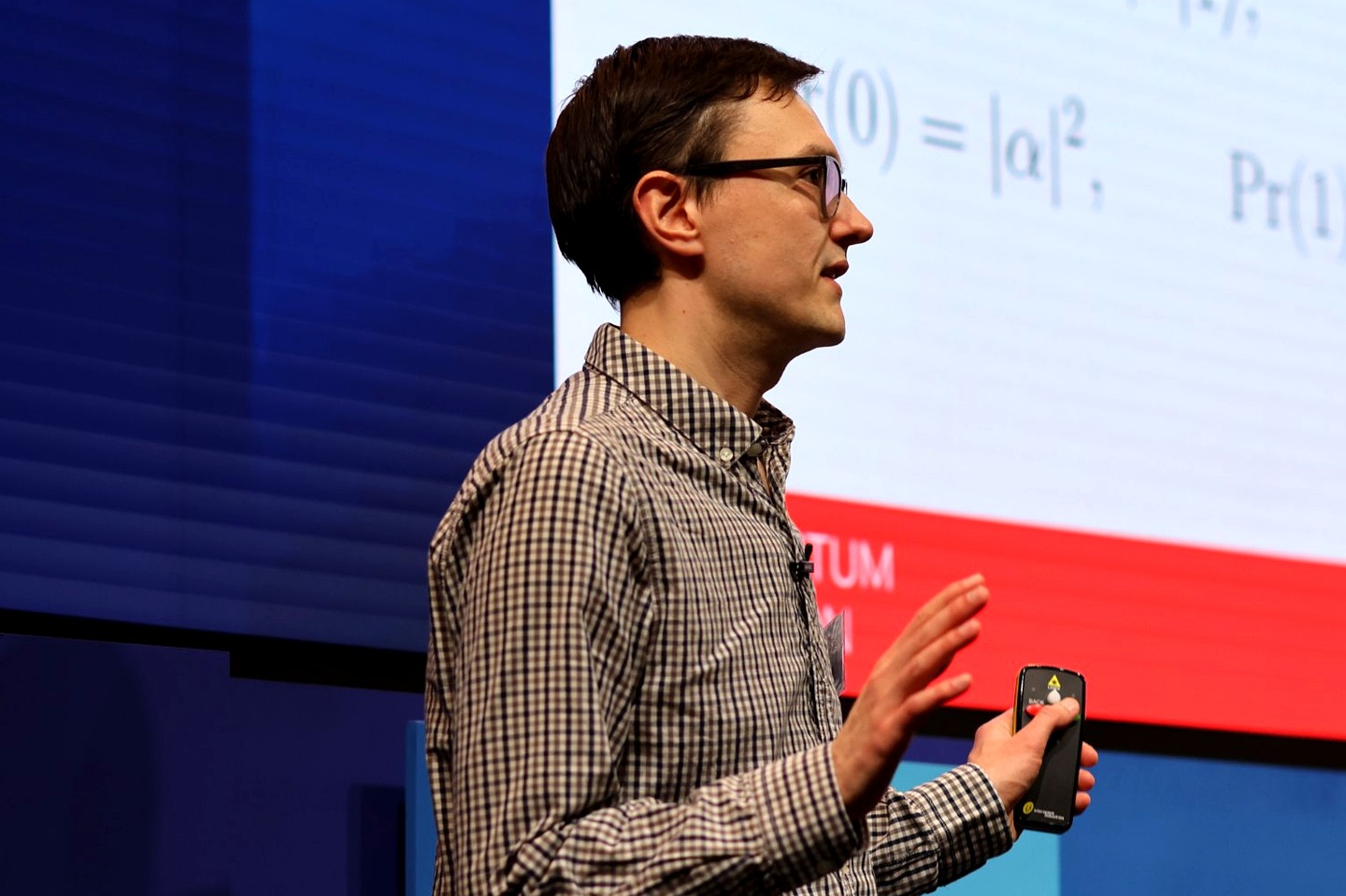
Thomas Bromley (Quantum Motion)
Conclusion
I very much enjoyed the conference, and in particular the variablity of topics discussed at the event. I very much look forward to future iterations of the same conference. Hopefully, next time, I won’t leave it another decade to attend.