
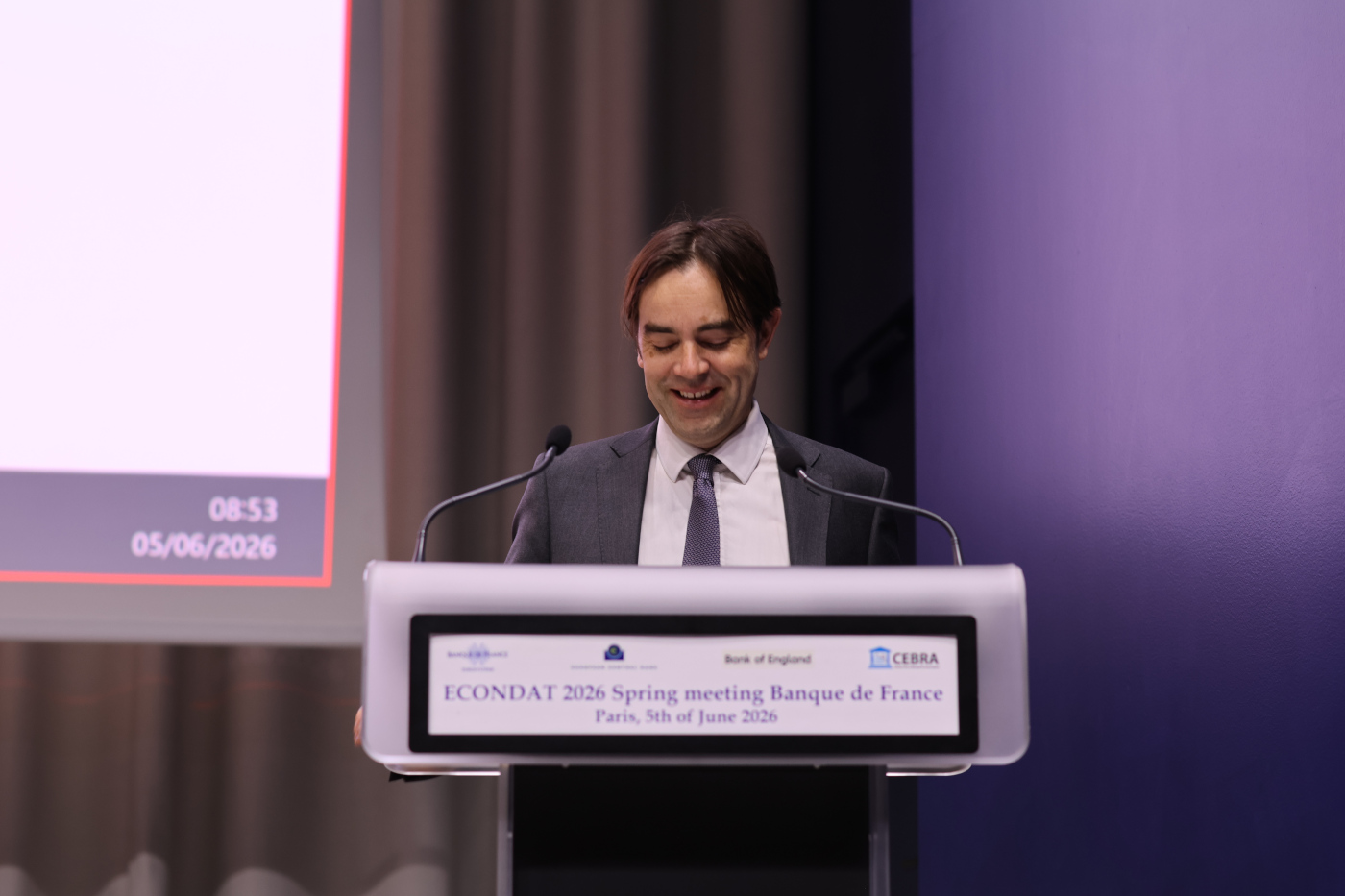
I’ve been to Paris many times over the years. Each time I’ve visited I’m always surprised at how much I still have to learn about the City of Light. I always say I’ll learn about the arrondissement system, and I promise next time I visit, I will know precisely where each one is. On my visit earlier in June, I went to the ECONDAT conference hosted at Banque de France which is short for “Economics with Nontraditional Data and Analytical Tools”.
The event has a mixture of researchers, practitioners, and policymakers. In this post, I’ll try to discuss my main takeaways from the event. Whilst I cannot be fully exhaustive, given the number of presentations during the conference, I’ll try my best to give at least a flavour of the discussions. I’ve been to the event several times in the past, and each time I’ve learnt new approaches to using machine learning from economic context, and it’s definitely affected how we think about forecasting inflation at Turnleaf Analytics.
The various sessions went over a number of areas, Economic Narratives (chaired by Jean-Charles Bricongne), Granular Data for Macroeconomic Analysis (chaired by Joel Suss), LLMs for Economic Modelling (chaired by Jerome Coffinet) and finally Forecasting and Interpretability (chaired by Roland Lubrano Di Scampamorte).
Nowcasting and more
The event began with a presentation from Sebastian Barnes (OECD) – title photo, discussing the OECD’s experiences with big data. He noted many different examples of delivering new insights whether it was calculating business sentiment based on earnings calls, nowcasting and shipping data, using Lightcast data to understand the labour market, using commits to repos to understand structural changes (eg. impact of GenAI on software development) etc. On the subject of nowcasting, Prachi Srivastava (University of Heidelberg) examined using ML and satellite data. She noted how night time lights could be useful for nowcasting in a severely data constrained environment.
Forecasting macro and markets
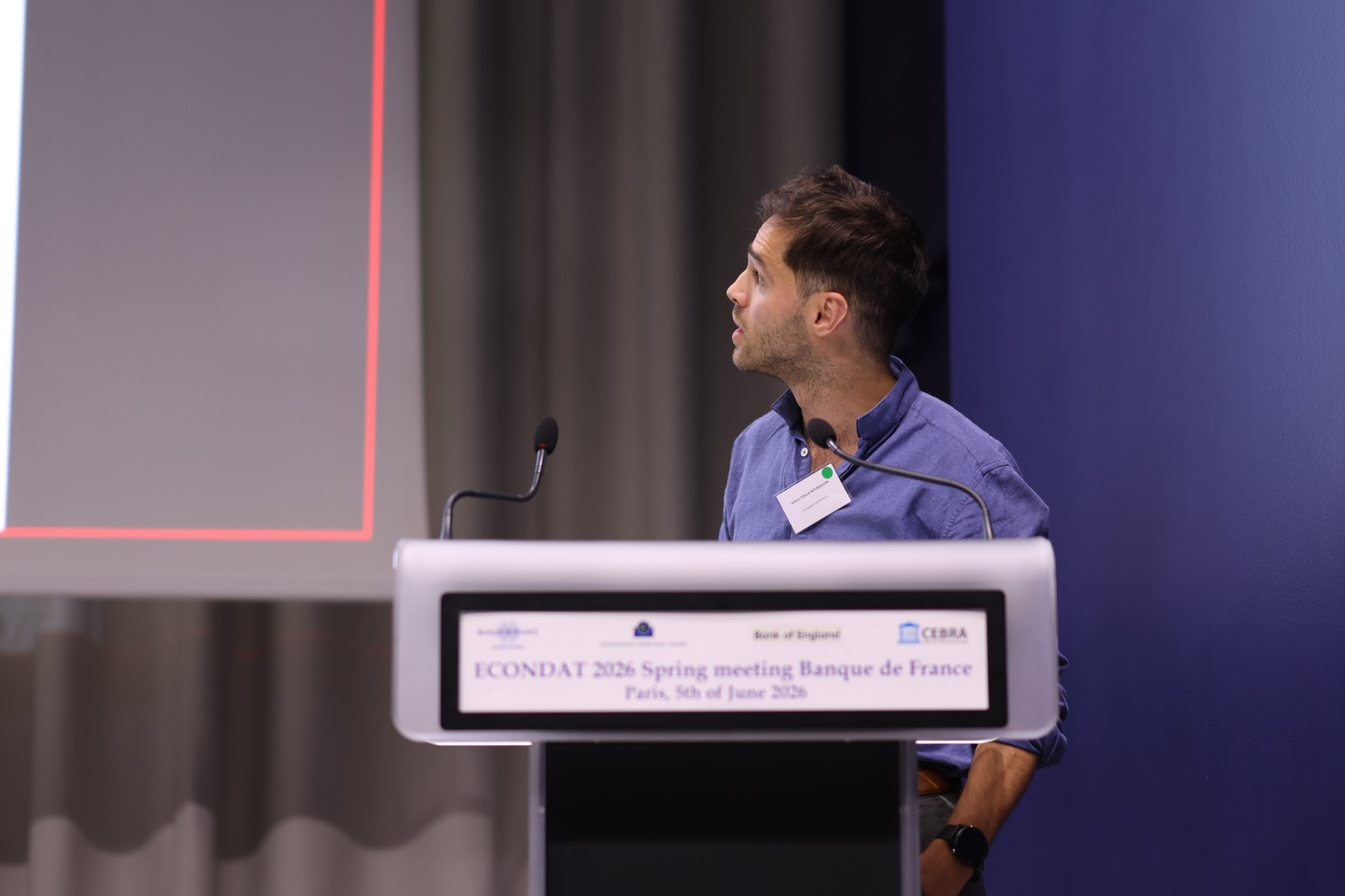
Arthur Stalla-Bourdillon (European Central Bank)
Arthur Stalla-Bourdillion (ECB) presented on using LLMs to predict oil prices, using as inputs OPEC and IEA reports. The results suggested there was solid forecasting performance, although OPEC outperformed IEA. One reason could be that OPEC was written by oil producers, whilst the IEA was more written from the perspective of oil consumers. At the same time, Alvaro Ortiz (BBVA) as the discussant, noted that there could be risks, such as that of memorisation, and one way to reduce leakage was to evaluate documents after the model training cutoff.
One of the most important elements of the forecast, is an explanation. Gabriel Rodriguez-Rondon (Bank of Canada) talked about using the interpretability in the context of macro forecasting with machine learning. It was possible to use SHAP to get variable importance. In his discussion he talked about extracting implied factors. The approach was to model each ML forecast as a linear factor model. Typically 2-3 factors were sufficient to describe the forecast. Interestingly, different ML models seem to discover the same latent factors.
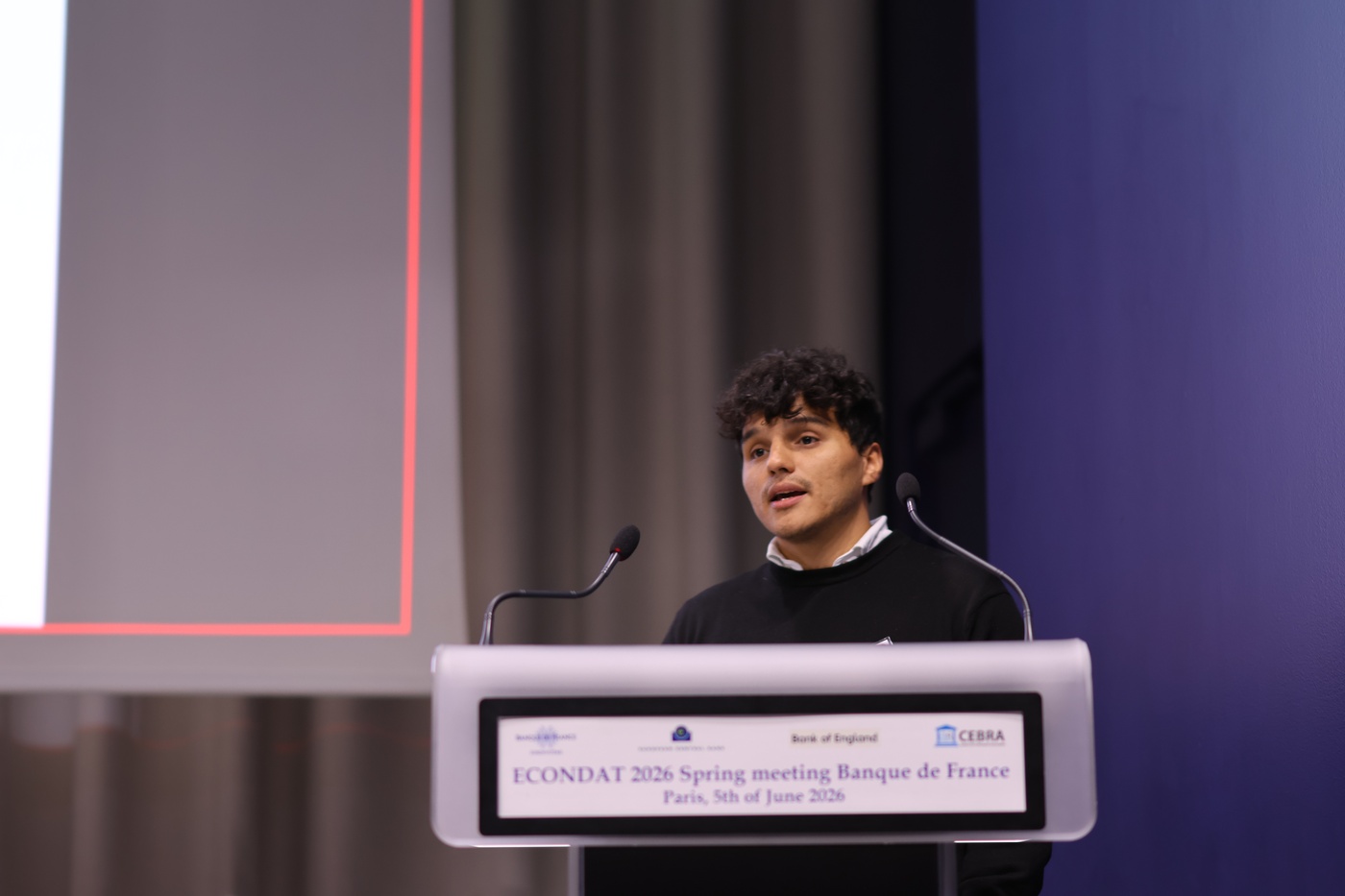
Gabriel Rodriguez-Rondon (Bank of Canada)
Macro narratives and climate change
There were many discussions around inflation data at the event. Johannes Zahner (Goethe University) talked about the spread of inflation narratives from central banks to households, transmitted by the media. Using hand labelled Fed press conferences, he looked at how they were picked up by the NY Times, and subsequently, how this filtered through to the NY Fed’s survey of consumer expectations for inflation data. He compared the various approaches from manual classification (which isn’t scalable) to approaches using supervised methods with LLMs (eg. ChatGPT-4 Turbo and MiniCheck – a new method to detect inflation narratives).
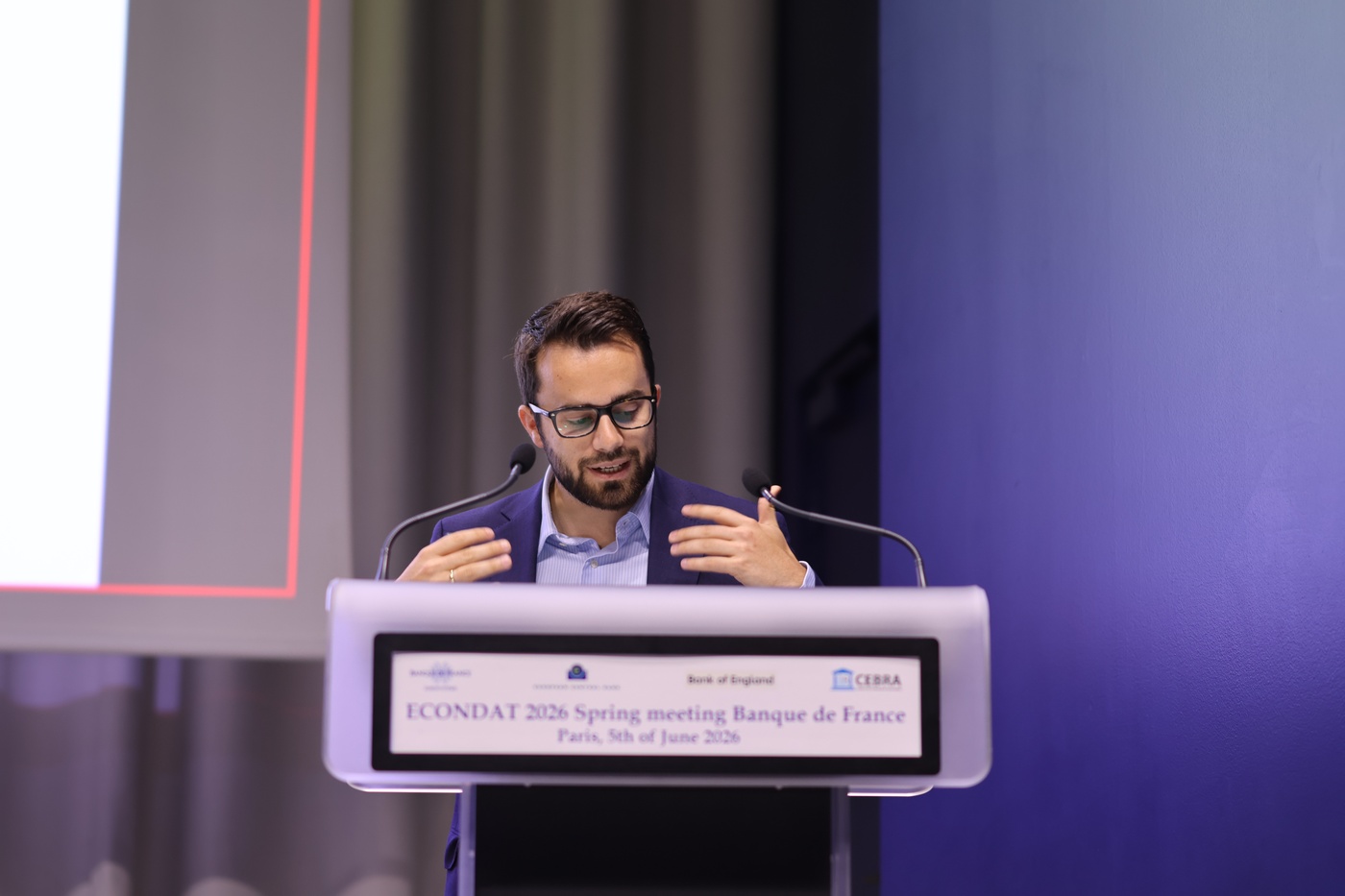
Johannes Zahner (Goethe University Frankfurt)
Farah Tohme (Goethe University) took a slightly different angle, trying to understand fiscal narratives and inflation, looking at how households read fiscal data via newspapers. The approach was using ChatGPT to identify fiscal narratives around expansion, unsustainable debt, spending and saving. There were complications that articles could have multiple narratives. The main result was that an expansion narrative led to an inflation narrative.
Climate change is likely to have wide implications from an economic perspective. One impact, which I had never thought about was how it could impact US banks. Maxime Fajeau (University of Lille), looked at the particular impact of El Nino. He noted that a strong El Nino could reduce banks’ distance to default by around 20%, and that La Nina matters more than El Nino.
Central banks and the IMF
Around every FOMC meeting there is significant speculation around the outcome. Tara Sinclair discussed “FOMC in Silico”, a multi agent approach. The ideal was to use AI agents to structurally encode members’ priors, speeches etc. alongside institutional norms, and simulate the outcome of the FOMC. In other words trying to translate reaction functions to committee behaviour. Alongside, FOMC personas, each simulation would also have an input of a synthetic Beige Book and a macro process. There’s an interesting application of this approach, by Joel Suss (FT) here.
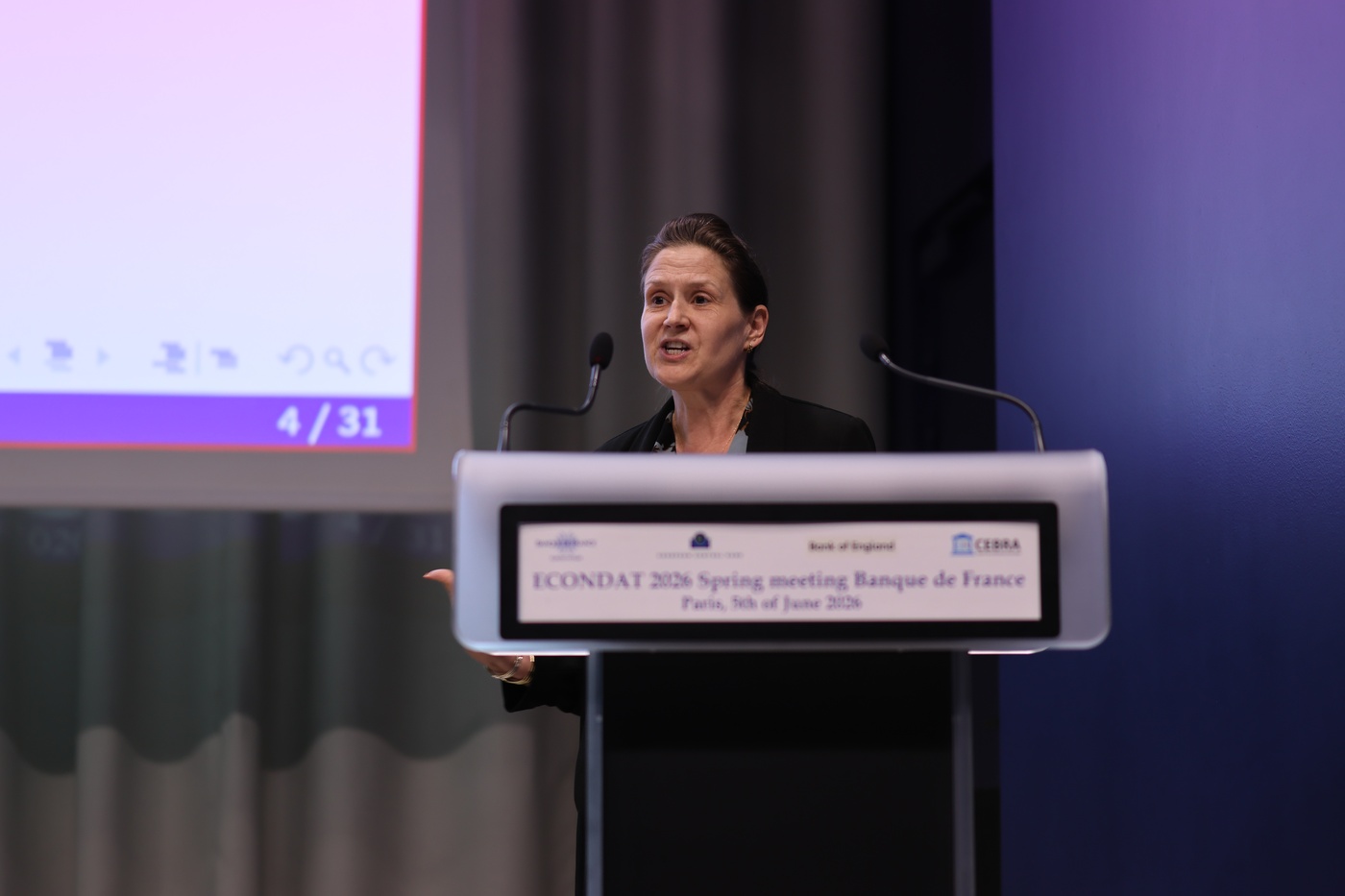
Tara Sinclair (The George Washington University)
Also looking at central bank meetings, David Gautier (Banque de France) focused on understanding monetary policy surprises by looking at communications from chairs and also non-chairs. His main observation was that non-chair speeches tended to have information about the future (which is somewhat expected). However, the key was that the market tended to underweight the impact of non-chair speeches. This tended to result in short-term forecast errors when it came to monetary policy.
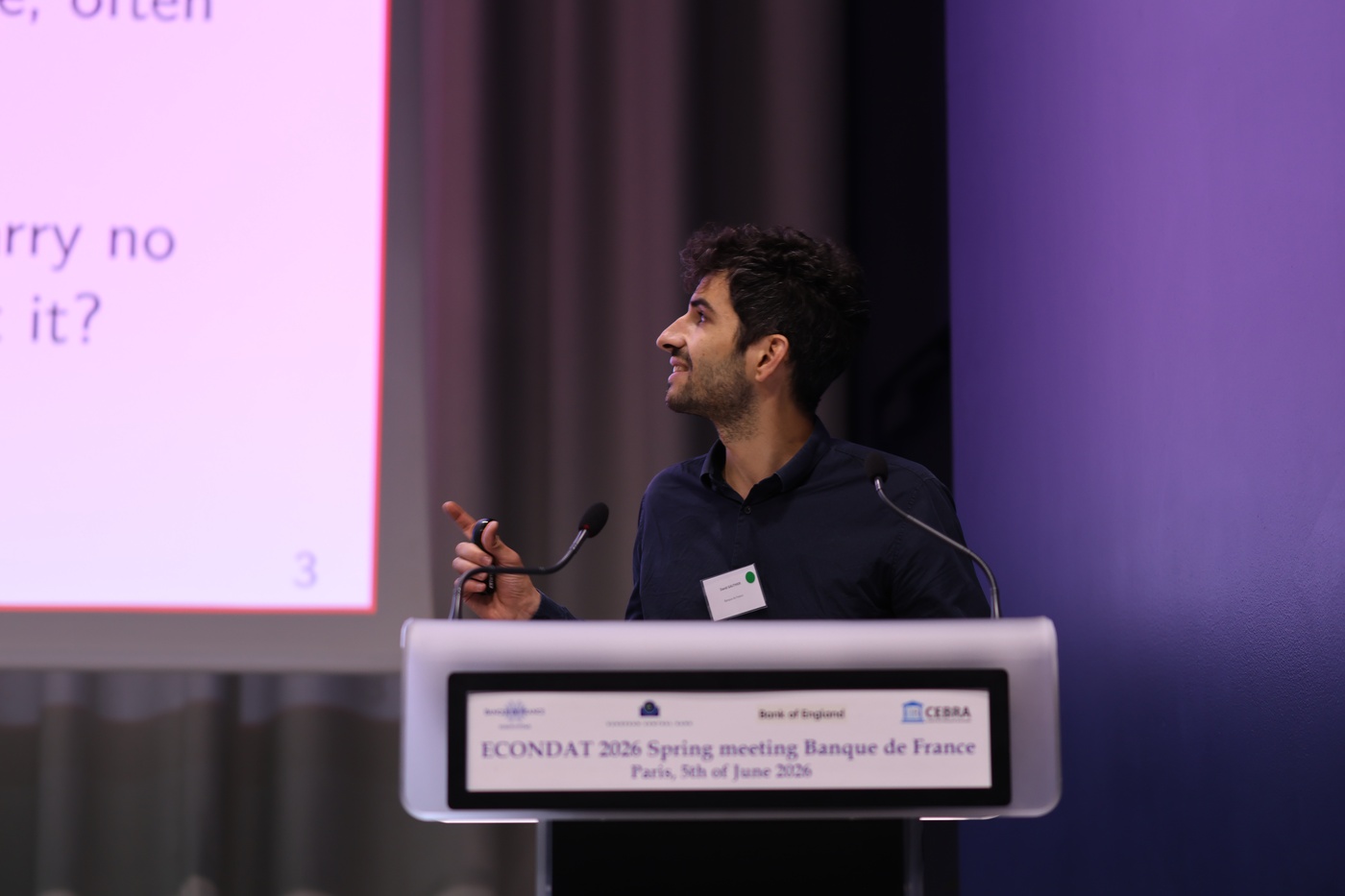
David Gauthier (Banque de France)
Keeping to the theme of central banks, Francesca Monti (CEPR) discussed how to track trust in central banks by using GenAI to analyse millions of tweets to create a social media based index of trust. Broadly speaking it correlated with moves in macro indicators, monetary policy events, tweets by the President and also ethics scandal involving central banks. There was also a discussion by Jeremy Cohen-Setton (IMF) looking at the use of LLMs to understand IMF fiscal advice in a systematic way over the past few decades. One observation was that it was not always the case that the IMF has had an austerity bias, in practice, he found whilst in the medium term there could be tightening bias, in the near term the advice was that of loosening policy.
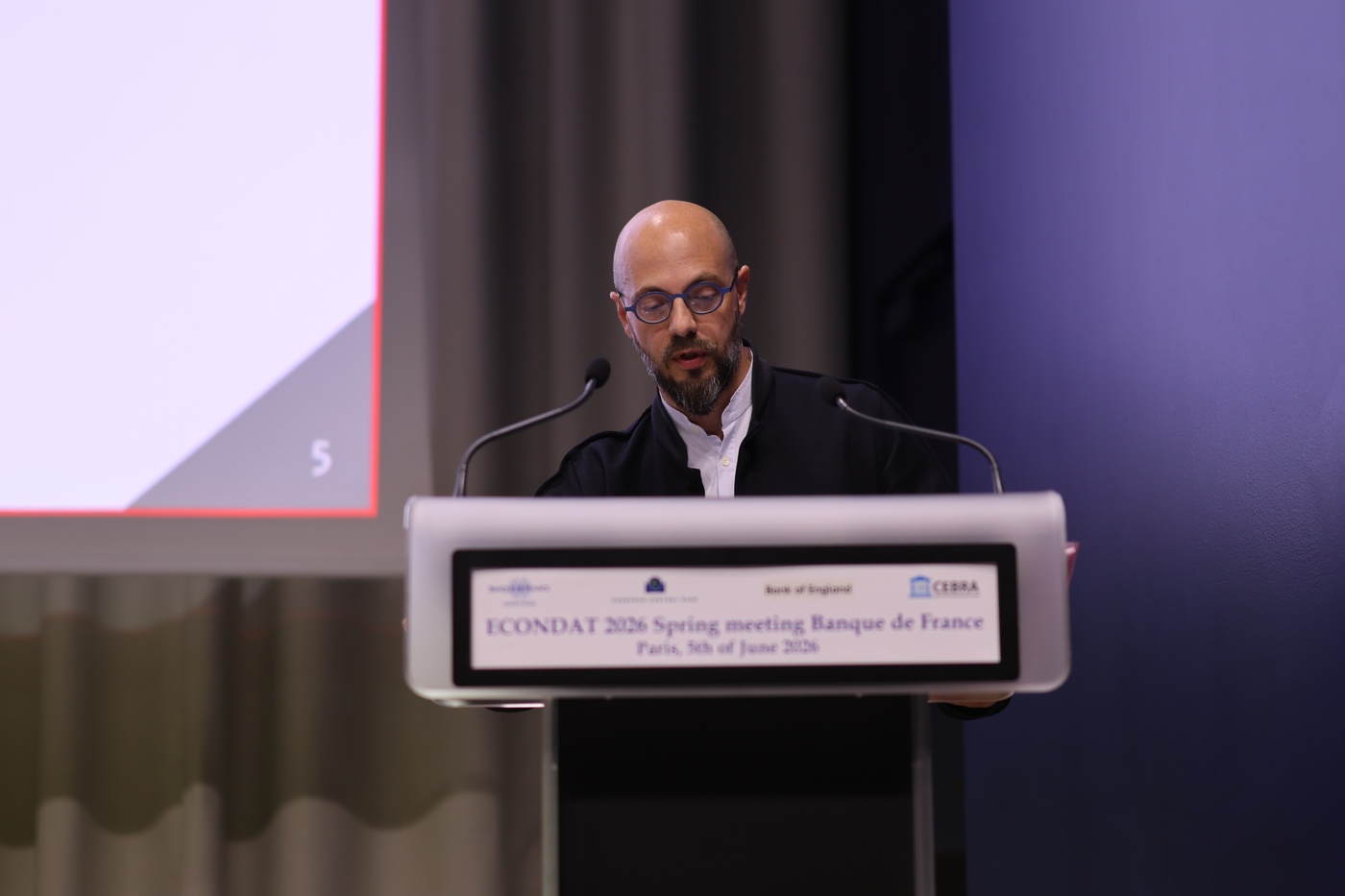
Jeremie Cohen-Setton (International Monetary Fund)
Conclusion
It was interesting to see the many different presentations on the day. In particular, a lot of the presentations discussed using LLMs in many different contexts when it came to analysing text data. Whilst there are caveats (notably around information leakage), LLMs have opened up many new (and also improved) ways of looking at text, and there are many such datasets in finance and economics.